Advertisement

Association chairs reflect on 2025

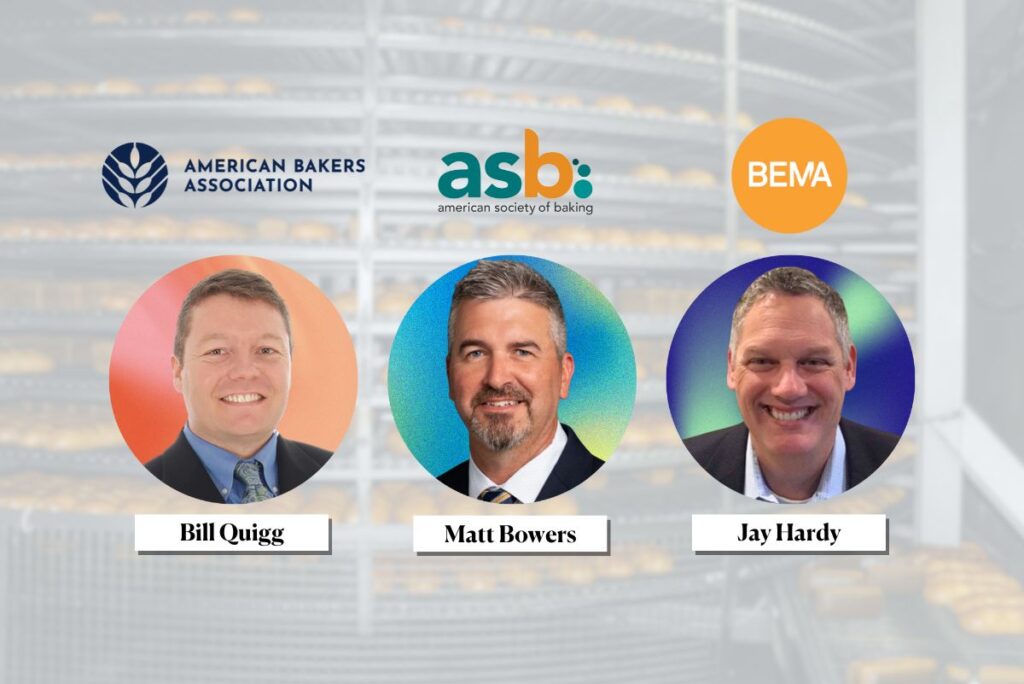
Bill Quigg, Matt Bowers and Jay Hardy with ABA, ASB and BEMA logos
GRAPHIC COLLAGE BY AVANT FOOD MEDIA
BY: Joanie Spencer

Joanie Spencer

KANSAS CITY, MO — The commercial baking industry certainly had its share of challenges over the past year. But it also demonstrated resilience and collaboration as bakers and suppliers came together across the board to discover new opportunities and solutions. Add in two international tradeshows — with IBIE at the peak — and there has been no shortage of fodder for reflection.

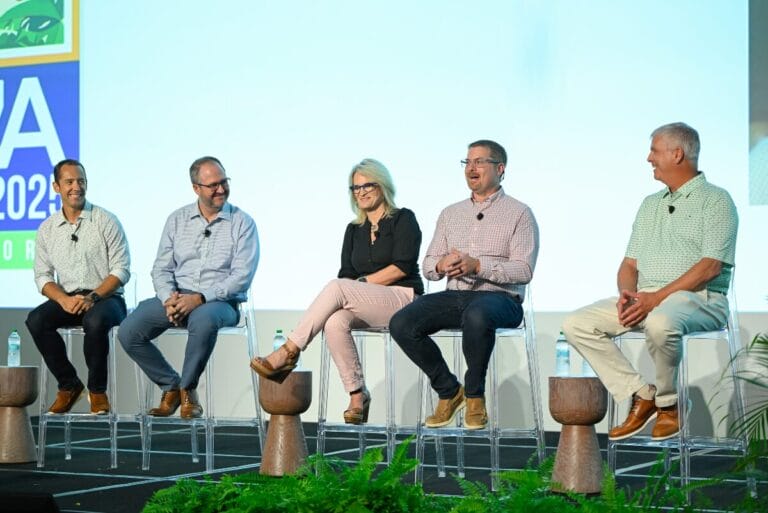
In the first roundtable of association servant leadership, Bill Quigg, president of Richmond Baking and More Than A Bakery; Matt Bowers, senior director of R&D for New Horizons Baking Co.; and Jay Hardy, VP of sales at J&K Ingredients — board chairs for the American Bakers Association (ABA), American Society of Baking (ASB) and BEMA, respectively — sat down with Joanie Spencer, editor-in-chief of Commercial Baking. They each shared their perspectives on what stood out in 2025 … and what they’re looking forward to in the year ahead.

Let’s start with some of your biggest moments from the past year.

Matt Bowers: Over the past year, ASB has truly doubled down on education and connection. We launched the Commercial Bread Production course, which is a hybrid program blending 10 virtual courses and a four-day hands-on workshop. We celebrated our first round of graduates, each leaving with practical expertise they can take back to their bakeries. We’re also expanding learning opportunities through preconference workshops at BakingTECH 2026, including Sensory Analysis 101 and the Evolution of Food Safety. This year, we strengthened our sense of community at IBIE by hosting the Recharge Lounge, where bakers, suppliers and students connected and shared ideas all together. It’s been a year focused on empowering professionals through learning and collaboration, and I couldn’t be more proud of the team.

Jay Hardy: For BEMA, coming off a very successful convention in Puerto Rico, we headed into IBIE, which was definitely the highlight this year. While most of our member companies exhibited, BEMA also played a large role with IBIEducate, sponsorships, and, of course, the volunteer programs and Wholesale Baker Stage. As a co-owner of the show, we’ve taken on more responsibility over the past few cycles, especially growing IBIEducate to offer more than 250 learning opportunities. And of course, working alongside all the associations, including ASB and ABA, we’ve all truly made IBIE the industry standard.

Bill Quigg: Reflecting on ABA’s year, advocacy has been at the heart of everything we do amid the landscape facing bakers and allieds. ABA has proudly championed the baking industry by representing our interests in Washington and state capitals, keeping members informed on issues that affect our businesses and elevating our industry’s essential role in feeding the country. ABA’s advocacy work requires strong relationships with our legislators and having open dialogue to help them understand the facts and science behind some of the thoughts that may be stirring in consumers’ minds. That was highlighted by the Fly-In in DC, when we met with folks from the House and Senate to understand their position and help them understand ours. Having a strong team representing our membership in DC has been really beneficial.

But the pinnacle of the year has to be IBIE and bringing the industry together in such a huge way. We had great participation from allied members and all the bakeries that were represented. It was such a compliment to the strength of the show and the strength of the partnerships that we have. That’s a shining star moment for me.
Advertisement

How would you summarize all the ups and downs of 2025?

Bowers: It’s been a roller coaster of a year in our industry. Despite economic ups and downs and regulatory uncertainties, one thing that stood out was the resilience and eagerness of the baking community to come together. Folks are hungry for networking and knowledge, and having two big gatherings in the same year helped rally people. It gave everyone a chance to share strategies, navigate cost pressure, compare notes for new regulations and see the latest innovations around the world. 2025 tested us with rapid changes, but it also validated the importance of staying connected when things are uncertain, whether politically or economically. The industry pulled together, and that gives me a lot of optimism going forward.

Quigg: This year was challenging, of course, but I say that not only from an ABA perspective but also from a broader industry perspective. A lot of the interests between bakers and allieds are very closely aligned. When you have situations like tariffs that, regardless of the economic impact, cause uncertainty, it’s difficult to effectively manage your business. And frankly, it filters down to everyone’s customer base as well. That said, we have seen a positive shift in predictability in the past few months, which seems to be something we can manage better than what we dealt with in the first half of the year.

Hardy: It all really shows how adaptive our industry is. We adapted, we tweaked, we transformed our offerings to meet the needs of our customers. And that will continue. Remember when Atkins felt like the end of the baking industry? But we all adapted. And to share our knowledge, whether it’s at iba or IBIE, I could see the level of industry participation around the world. It shows you that people are eager to learn and stay relevant. And that gives us all the opportunity to understand how we can be better.

Advertisement

What’s the biggest change you’ve seen in the past five to 10 years, and how have your associations adapted?

Quigg: Specific to ABA, the political environment has certainly evolved, along with having a strong advocacy team focused on that as a core value proposition. As a long-time member of ABA, I’ve gained tremendous value having that voice in Washington that I can count on to advocate for what’s in the best interest of our industry.

More recently, I’ve seen a positive shift in collaboration among associations. There’s a real desire to be efficient with our membership, money and resources, and associations have been focused on the strengths of each organization while also helping one another dial into their strengths.
We have this great dynamic, this great energy as an industry, and when we play into our individual strengths, the industry becomes stronger. Today, it’s less of a competitive landscape and much more of a collaborative one.

Bowers: One of the biggest shifts has been the decline of traditional training programs. I had a chance to attend AIB, but that’s no longer available, and it’s left a big gap in industry learning. ASB recognized that gap early and made it a priority to bring practical education back to the industry through hands-on training. The hybrid bread course allows professionals to learn without ­stepping away from their jobs for weeks. We’re also expanding modular online content and short-format workshops to keep skills current. As technology advances, ASB is, in turn, becoming a go-to resource for technical education, so the next generation of bakers can build on the science and the craft, even as the industry evolves.

Hardy: The most significant change is the actual rate of change in areas like the economy and the workforce. Matt, you said it perfectly: technology, consumer needs and wants. The change is happening at a pace that I don’t believe has ever happened. For BEMA, our mission and vision focus on finding ways to adapt commerce. We have conversations and strategy sessions about honoring decades of tradition and also being bold enough to make change with new ideas. Today’s world is a place for change, and BEMA is strategically planning for it.

Advertisement

How are you addressing the challenges your memberships face these days?

Quigg: There are some interesting consumer shifts, particularly as they relate to GLP-1 drugs, as well as ultra-processed foods, specifically understanding the difference between accurate, scientific information and what’s just a headline.

If you think about the nutrition-packed nature of the products we make — the whole grains, the fiber contents, the vitamins — having ABA educating consumers and legislators on what science tells us about our food is really beneficial. ABA is coming out with position statements regarding things such as artificial flavors and colors, and that’s helping people understand where we are as an industry and where we’re going.

With immigration, we’re challenged with building consensus on a path forward. We need one that makes sense for the country as well as our industry, while appreciating and respecting different viewpoints. We have to balance that with the fact that we need a strong, viable workforce, which means figuring out the best way to advocate on behalf of our industry. That’s a challenge that’s keeping me up at night, from the standpoint of trying to gain consensus in the industry. We’re not there yet, but we’re working on it.

Bowers: For ASB members, one major issue that keeps them up at night is the workforce, finding and developing skilled people. There’s a talent gap, and our members are feeling the pinch. We hear concerns like, ‘How do you train the next generation fast enough? How do we retain new hires to become long-term assets?’ We’re laser-focused on workforce development to ease these worries. We’re providing more education and training resources, from the new bread production course to an expanded lineup of technical webinars throughout the year, and it’s all aimed at upskilling employees in critical areas. And just as important, we’ve ramped up our mentorship program, pairing emerging professionals with seasoned veterans one-on-one so knowledge can get passed down. These matches create relationships that build confidence, loyalty and support.

Hardy: I’ll just continue there. When we think about BEMA, we have our equipment members and allied members. Giving the allied perspective, I can say labor is still an issue for manufacturing facilities. One of the big takeaways from IBIE was capital. Where is the capital? Is it automation, increased quality? More AI and understanding those needs? This all comes from an equipment standpoint and a training standpoint. At BEMA, we’re tapping into discussions through the Baking Industry Forum about how to use tools like AI. And from an ingredient standpoint, it’s trying to understand and listen to the consumer, following consumer trends, listening to what’s being asked for. By working with our baker partners and giving them what they need to fulfill that automated side of their business, we’re helping make sure consumers receive the products they want, and that they’re high quality and affordable. It’s about making sure we’re able to keep feeding people.

This story has been adapted from the 2025 Innovations Annual of Commercial Baking. Read the full story in the digital edition here.

Related News

Advertisement

Advertisement

Advertisement

Advertisement

Popular Articles