Taking a deep dive
With challenges come desirable benefits, including moisture retention, cooking uniformity, shelf stability, formulation flexibility, optimal preservation and operational efficiency. And, as demand for mobile, convenient breakfast and lunch options grows, bakeries are in a unique position to unlock the capabilities of sous vide to create more functional and nutritious products.
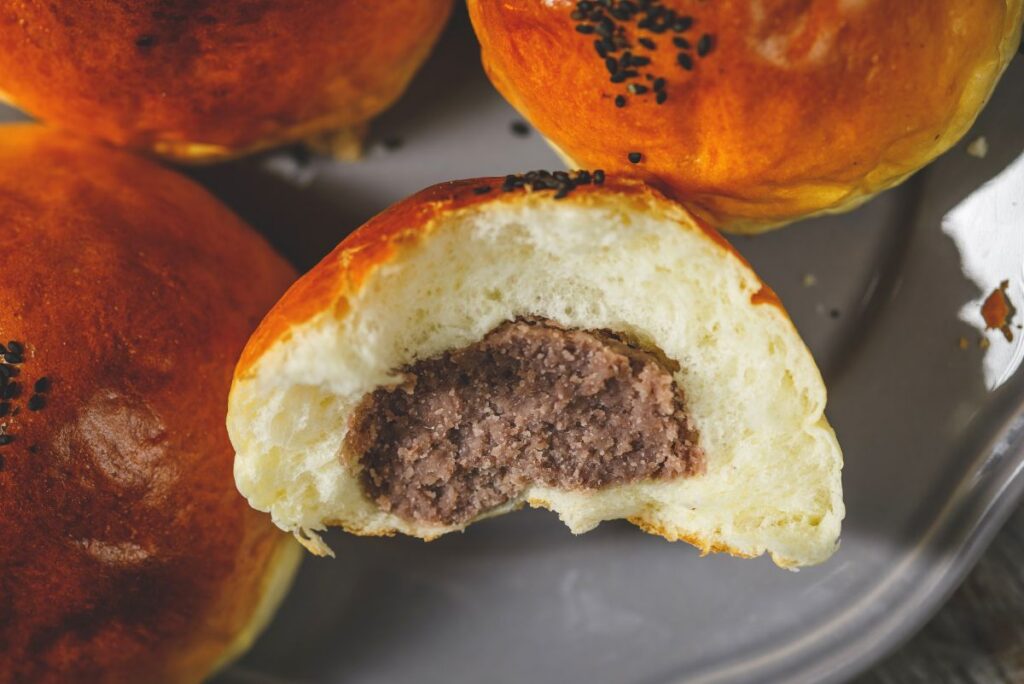
“Consumers seek nutritious, grab‑and‑go options that don’t sacrifice quality or nutrition,” Guinchard said. “Our sous vide products stay fresh for seven days in the refrigerator and one year in a freezer, making them ideal for pre‑packaged sandwich and breakfast stations. We’re developing the complete solution in a portable matrix, one single eating format with unlimited shape possibilities.”
With the new frontier of health-and-wellness being defined by protein levels and fiber intake, getting a jump on this process could help bakers meet consumers in those moments of fully fueled convenience.
“Today, the first question is, ‘What is the protein percentage?’” he said. “Naturally, with our flour and the protein inside, we are around 21 to 25 percent of protein in our product. When we cook sous vide, we don’t destroy the protein percentage; we maintain the same levels.”
The CPG bakery market has been flooded with innovative protein-packed snacks and breads, though little growth has been seen in the products stocked in grab-and-go markets. By using sous vide, bakers can enrich their bakes with full protein sources as opposed to artificial additives, prioritizing clean labels and transparent ingredient sourcing.
The main thing to note as bakers consider venturing into this technically complex world is that it’s a long‑term strategic avenue, one that requires commitment, investment and maybe a few equipment modifications. While most commercial facilities house industrial dough mixers with temperature control, large‑scale sous vide baking also requires precision water baths, vacuum sealing automation and rapid cooling lines.
Cuisine Solutions’ years of R&D work have established the company as the go-to partner for foodservice operators, distributors and consumer goods players looking to integrate these innovative products into their portfolios without having to bear the burden and risks of in-house development.
Guinchard guarantees the business investments and foundational partnerships and are worth it, citing what he describes as a dual market split, with traditional artisanal bakeries on one side and technological commercial operations — those using sous vide, controlled fermentation and other experimental innovations — on the other.
“It’s not a trend; it’s not a wave … It’s really a new adaptation of the bakery,” he said.