Advertisement

Tradeshow ‘ins’ and ‘outs’: Next-gen attendees at IBIE

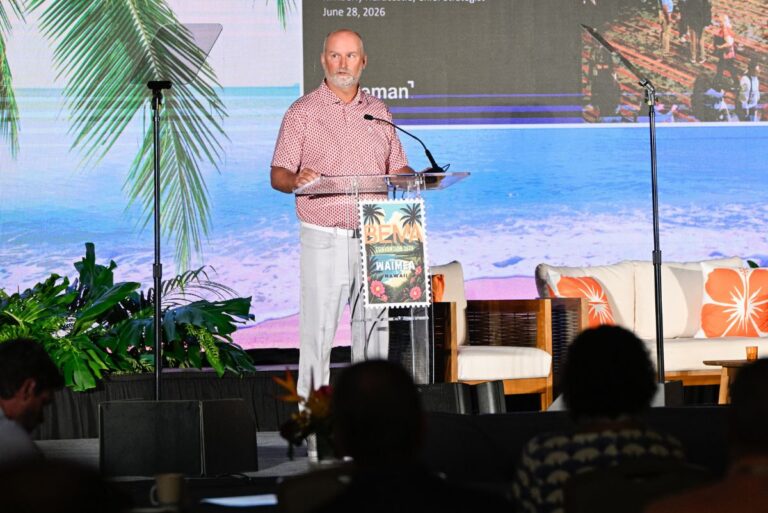
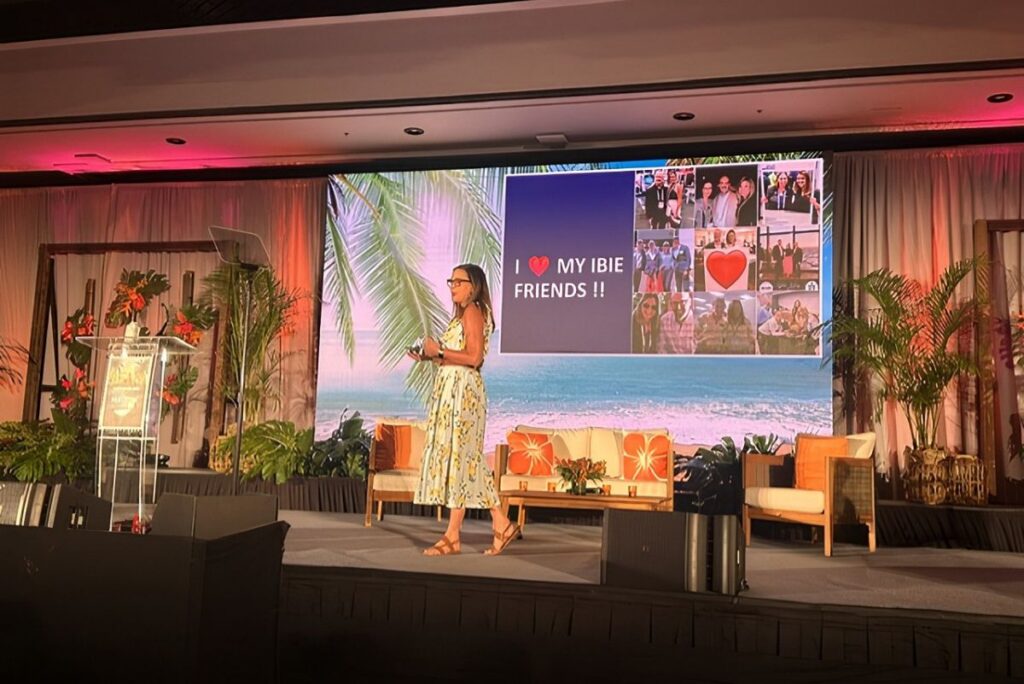
Kimberly Hardcastle onstage at BEMA Convention 2026
PHOTO BY AVANT FOOD MEDIA
BY: Joanie Spencer

Joanie Spencer

Kimberly Hardcastle, chief strategist for Freeman, a global leader in exhibitions, exhibits and events, has worked with the International Baking Industry Exposition (IBIE) in various roles throughout her career for more than two decades. In her current role, she works closely with Freeman’s Audience Insight Division, which fields quarterly research across the company’s portfolio of events, which includes IBIE. At the BEMA annual convention, held June 25-29 in Waimea, HI, she shared insights for what attendees expect from their show experience.

In this installment of a three-part series, Joanie Spencer, editor-in-chief of Commercial Baking, outlines Hardcastle’s advice for ensuring a successful IBIE 2028 booth experience.

WAIMEA, HI — For the commercial baking industry, tradeshows are a key growth driver, and perhaps none more than IBIE, set for Sept. 9-13, 2028, in Las Vegas. BEMA, which co-owns IBIE with the American Bakers Association, hosted Hardcastle at its annual convention, where she tapped into Freeman’s research that has revealed demographic and behavioral shifts in who’s walking tradeshow floors … and what they expect when they get there.

Advertisement

“The way attendees now move through events is different,” she said. “And the way they’re making decisions has changed.”

Based on these shifts, here are Hardcastle’s suggestions on what’s “out” and “in” for the future of tradeshows like IBIE.

OUT: Yesterday’s attendees

IN: Next-gen event goers

The next generation includes not only the Gen Z entrance into the workforce but also millennials who are now moving into the positions of authority. According to Freeman research, these attendees are shaping modern tradeshow expectations.

“Millennials have much more influence than they have in the past,” Hardcastle said. “The industry used to see them as the up-and-comers, but it’s clear that millennials are very much here in positions of leadership and authority.”

While many IBIE exhibitors will be starting their 2028 booth strategies soon, the show is still far enough out that the workforce will make noticeable shifts before then.

Freeman research indicates that by the end of this year, Gen Z will represent 28% of the workforce and millennials 42%, compared to 8% for baby boomers and 22% for Gen X. And by 2030, millennials and Gen Z will make up 75% of the workforce.

The mindsets of these two groups were significantly impacted by the state of the world when they entered the workforce. Millennials started working at a time of economic instability and digital transformation, while many Gen Zers stepped into their careers in the middle of a pandemic, economic uncertainty, extreme political uncertainty and the onset of AI.

“Oftentimes, the reason why generations show up to the workforce in the ways they do is based on a logical response to the things that are happening in the world around them,” Hardcastle said.

Next-gen event goers may be the most comfortable with technology, but they’re also the most likely to have skepticism toward it. This means that while they’re using technology to research exhibitors ahead of time, they’ll still expect human interaction on the show floor. According to Freeman, Gen Zers enjoy in-person interaction as a way to build interpersonal skills and strengthen their professional development.

“Technology isn’t going to make tradeshows less relevant,” Hardcastle said. “In fact, they may become even more important. And it’s critical for exhibitors to show up in a way that’s relevant to how the next generation learns, connects and builds trust.”

By the end of this year, Gen Z will represent 28% of the workforce and millennials 42%, compared to 8% for baby boomers and 22% for Gen X; by 2030, millennials and Gen Z will make up 75% of the workforce. — Freeman | Audience Insight Division

Advertisement

OUT: “Here’s what we do”

IN: “Why what we do is right for you”

When the attendee demographic changes, so must the conversations in the exhibitor booth.

Traditionally, the tradeshow floor was the first step in discovery.

“IBIE has always been a place for discovery,” Hardcastle said. “But now, much of that discovery is happening before people get to the show. They’re researching online, watching videos, talking to peers, they’re comparing options. And they might be arriving at IBIE with a short list already forming. The show is an important part of the buying process, but it’s becoming important at a different stage for different reasons.”

A tradeshow booth is becoming less about discovery and more a method for validation and confidence building.

“When someone comes to your booth, they’re not as likely to ask, ‘What do you do?’” Hardcastle suggested. “They might be asking, ‘Is this right for me? Is it right for my company or my customers? Is it right for the problem I’m trying to solve?’ That’s a very different conversation than a basic product introduction.”

The key to productively changing that conversation often lies with how the booth team is assembled. Hardcastle suggested focusing on team members who are prepared for more in-depth conversations and who can answer more technical questions.

“The IBIE booth becomes an opportunity to influence buyers while they’re actively comparing, validating and deciding,” she said. “That’s a really powerful moment. You want to ask yourself, ‘Who are we trying to influence? What will they already know about us before they arrive? What questions will they likely ask, and what will help them understand if our solution is the right fit?’”

This is the first in a three-part series focused on IBIE exhibitor strategies. For more information on IBIE and booth selection, visit www.bakingexpo.com.

Advertisement

Related News

Advertisement

Advertisement

Advertisement

Advertisement

Popular Articles