

Advertisement

Legacy pie makers’ precision crafts consistency

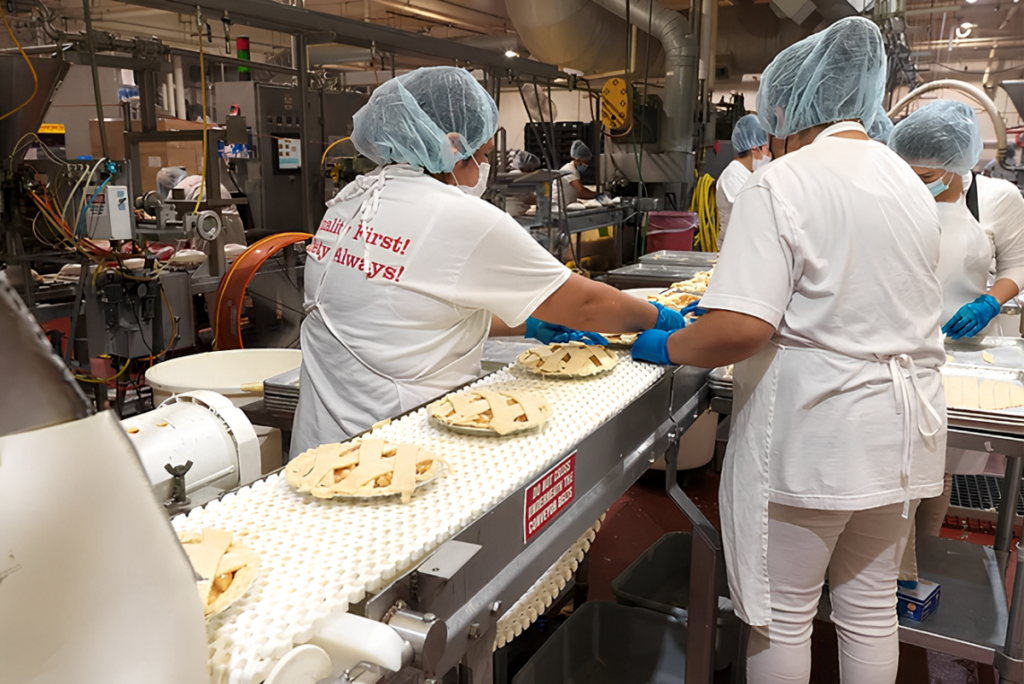
Workers making pies at Rocky Mountain Pies facility
PHOTO COURTESY OF ROCKY MOUNTAIN PIES

KANSAS CITY, MO — Pie is timeless, yet evolving consumer tastes reach beyond its traditional offerings.

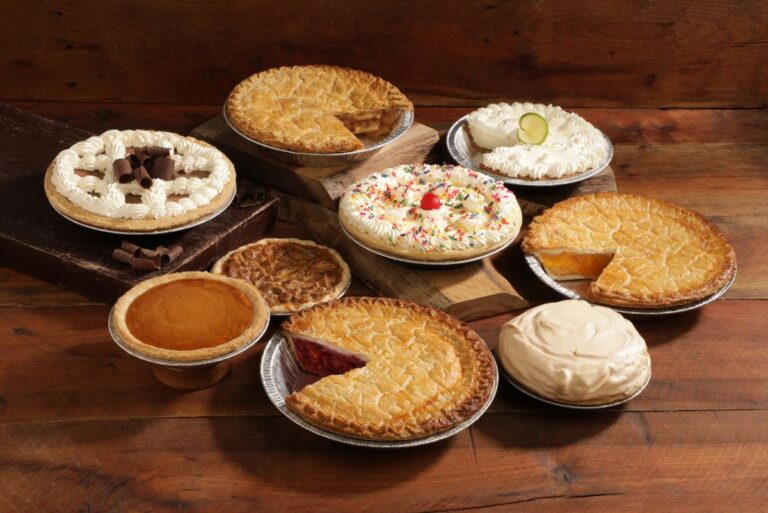
Here, a few pie manufacturers share their insights on balancing modernized production with handcrafted details … and why collaborating with customers to expand flavors and sizes is the cherry on top.

Years of expertise

From its beginnings baking homestyle pies for Marie Callender’s restaurants to starting its first pie company in 1988, Salt Lake City-based Rocky Mountain Pies has mastered the art of pie making. The company blends expertise with precision manufacturing and a commitment to crafting pies that help customers increase sales or save on labor.

“Our team has been in the pie business since the 1970s, developing a wide variety of proven profiles that we can adapt to fit the challenges of any new pie project,” said Mark (Par) Grandinetti, founder and president of Rocky Mountain Pies. “We communicate with our customers to understand the important flavor profiles in their marketing area, and we work to create the type of pie products that set them apart from their competitors.”

Advertisement

Rocky Mountain designates manufacturing lines for each product style. High-speed lines are used for pie crusts, fillings and crimping as often as possible to increase efficiency and output, but operations can slow from 100 pies per minute to between 40 and 60, depending on what’s being made.

The bakery’s lines produce both single- and double-crust pies. Double-crust pies move through the automated glazing station, which finishes the top crust with whole egg prior to baking. The equipment captures the egg runoff, allowing Rocky Mountain to collect and refrigerate it for reuse, which minimizes ingredient waste.

“Some [manufacturers] spray sugar water or a baker’s shine on pies, but this technique turns the top layer of a double-crust pie into a sugar cookie instead of flaky pastry,” Grandinetti explained. “While the egg glazing process slows down the lines, this tradeoff creates a point of difference with our pies that is going to stop the cart and grow our customers’ businesses.”

Running the brand’s iconic twisted lattice pies also slows production. That’s because this style is labor-intensive, requiring the lines to be modified to generate the manually placed lattice strips, which are woven vs. crisscrossed on top of each other.

“Commercial bakers must constantly consider whether to use expensive labor when automation can be more efficient and maximize output.” — Mark (Par) Grandinetti | founder and president | Rocky Mountain Pies

Advertisement

“Commercial bakers must constantly consider whether to use expensive labor when automation can be more efficient and maximize output,” Grandinetti said. “Our award-winning twisted lattice pies may slow down production, but the hand-laid lattice creates an artisanal look that resonates. We perfected the combination of automation and labor to make production smooth, and it pays off.”

The majority of production for Minneapolis-based Rise Baking Co.’s pie brands is reinforced by automated systems designed to ensure consistency, food safety and efficiency at scale. This process allows operations to deliver reliable quality across high volumes while maintaining the standards Rise Baking customers expect. Still, sometimes a product calls for handcrafted finishing.

“While automation is essential for production, some select steps for our pies are completed by hand where it enhances the final product, particularly when it comes to appearance, finishing touches and overall quality,” said Mike Docherty, EVP, marketing, R&D and innovation at Rise Baking. “We focus on using the best approach for each product and process, blending automation with hands-on care to consistently deliver high-quality pies that perform well for our customers and their operations.”

Advertisement

Production needs from pie to pie

With decades of experience, the company has found that each pie variety comes with its own nuances, and no specific pie is more challenging to produce than another. However, one of the consistent production complexities is the crust itself.

“The flaky, delicate texture that makes pies so appealing is also what makes them fragile to handle at scale,” Docherty explained. “From intricate lattice tops to crimped edges and decorative finishes, keeping product integrity from production through packaging requires great care.”

For more than a century, San Antonio-based Lone Star Bakery has merged family traditions with innovation driven by progress. As modern freezing techniques evolved to allow freshly baked products to be shipped, the bakery scaled its business and now serves foodservice distributors and grocery chains and manufactures fried pies for some of the top 200 QSR brands.

This story has been adapted from the April | Q2 2026 issue of Commercial Baking. Read the full story in the digital edition here.

Related News

Advertisement

Advertisement

Advertisement

Advertisement

Popular Articles