Advertisement

Building consumer trust amidst a sea of misinformation

Building consumer trust amidst a sea of misinformation
BY: Lily Cota

Lily Cota

CHICAGO — Food science as a discipline is vast, integrating biology, chemistry, biochemistry, physics, engineering and … consumer behavior. For those on the outside looking in, this may seem like a separate field, something done on the backend when all the nitty-gritty science is completed. But for those in the mix, understanding consumer behavior and disseminating complex information in a simplified manner is rising to the top of the priority list.

This priority was prevalent across the show floor at the Institute of Food Technologists (IFT)’s IFT FIRST event, weaving its way into every keynote address, education session and panel discussion, no matter the topic.

Kelly Hensel, deputy managing editor and senior manager of content creation at IFT, moderated a panel of three consumers in different stages of life. The conversation highlighted the generational experiences that guide the modern shopper as they navigate the grocery store.

Advertisement

To each their own

Raven, a college senior, shops solely for herself, while Amber, a Gen X single mom, shops for a household with children. Kevin is a retired state police officer who’s started taking his health and wellness more seriously.

The panel showed that clear, concise communication is critical for consumers, no matter what age, economic position or social influence.

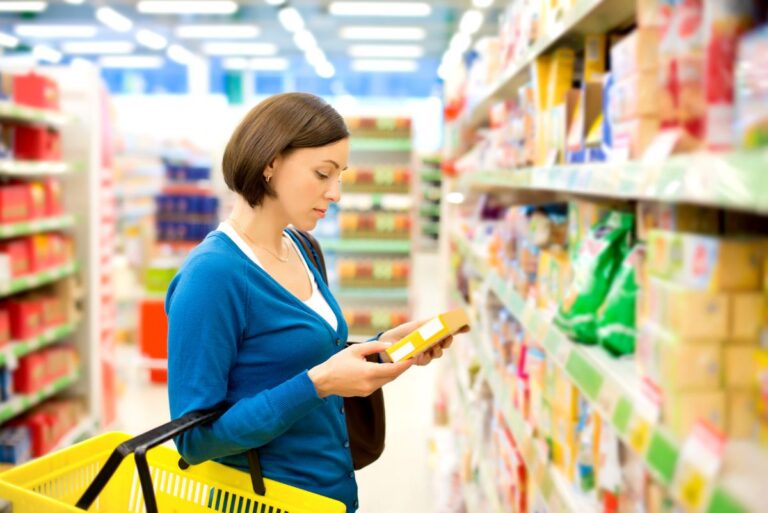
“My kids and I are vegetarian, so I’m always looking at protein content because that’s not just being thrown at women my age, but also at kids,” Amber said. “I also focus on finding more natural ingredients, avoiding dyes and preservatives by checking the label.”

For Raven, her protein intake goals are influenced by social media and friends who have jumped on the trend. She prioritizes getting protein in her diet first thing in the morning to start her day. Kevin, who grew up in the ʼ60s and ʼ70s with a front row seat to the early age of labeling regulations, shared his disconnect with what a package says and what a product provides.

“In the ʼ80s, we thought cereal was healthy because it said so on the box,” Kevin said. “I grew up in a time when we just ate everything, but as I’ve gotten older and my metabolism has slowed down, it’s been hard to maintain weight and health, even when tracking the label.”

Advertisement

Thrown for a loop

This confusion is partly due to the rush of trends without adequate scientific backing or clear translation of data, leading consumers to scramble to fit new routines and nutrients into their day without knowing what the results will be. How do they know which routines to follow or what to put in their bodies?

“I don’t know that I trust anything fully,” Amber said. “I’m inundated on social media with questions about how much magnesium I need at my age and whether I’m getting enough protein. I can’t say I trust any source, but I’m constantly being fed information and having to see what sticks.”

Raven, a Gen Z student who knows all too well about AI search engines, also has a hard time finding credible resources.

“It’s hard because I feel like every time I try to learn something, it’s all from Google AI, Grok or whatever else, and I just don’t trust anything that AI says about the human body,” she said. “I talk to my doctor, but a lot of it is what my friends say and what works for them. I know I’m at least getting enough food to sustain myself, and in a world where everything is super processed and you can’t trust anything, it seems like that’s as good as I’m going to get.”

Straight to the point

The overwhelming urge to cut out everything “processed” or artificial is affecting consumers globally, creating confusion about which foods are truly “good.” That’s where proper labelling and awareness come in to help close the gap between scientific intent and everyday decision-making. Consumers aren’t concerned with processing technologies or metabolic pathways … they’re worrying about getting dinner on the table, stretching a grocery budget and having more energy.

Simplifying front-of-pack messaging to answer the questions consumers ask every day can make the hardest decisions seem intuitive.

“Most consumers are looking at an ingredient, thinking, ‘Do I understand what this means? Is it safe? Is it okay to give to my family?’” said Laura Hoover, EVP, food and beverage, Edelman US, during a keynote panel discussion on science communication in the age of misinformation. “The most important thing is to look at ingredients and to look at food beyond our vantage point, and to think about what that consumer is thinking.”

For science to resonate on the shelf and on the plate, companies must tap into consumers’ realities:  GLP-1 medication usage, single-serve households and information overload. Those that do will build loyalty and trustworthiness across every generation.


Advertisement

Related News

Advertisement

Advertisement

Advertisement

Advertisement

Popular Articles