

Advertisement

AI vs. traditional tech: How to differentiate the two

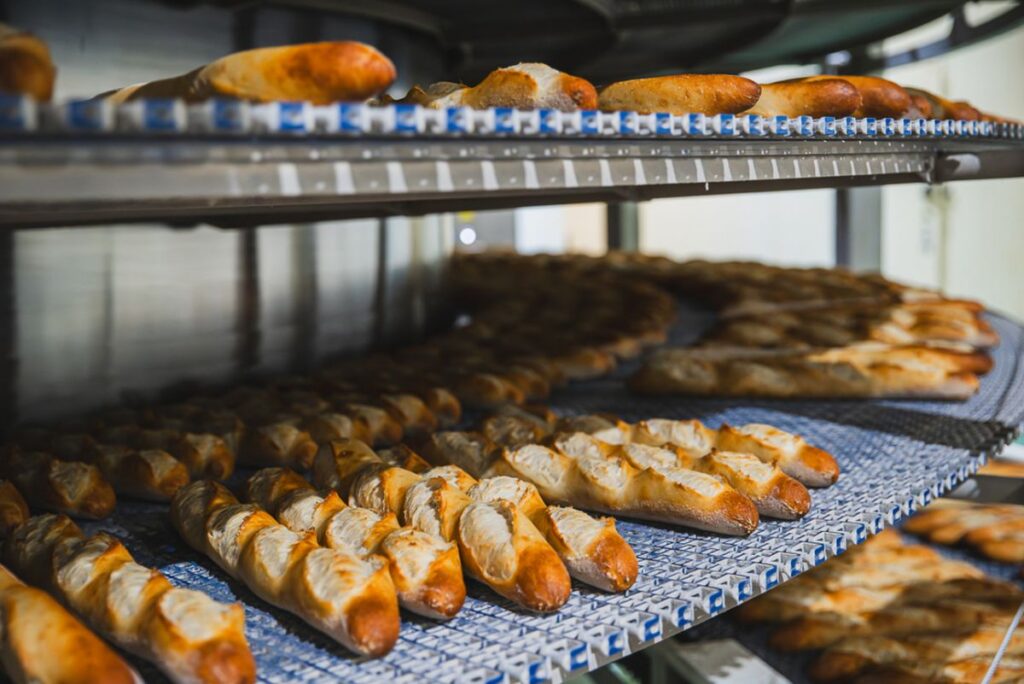
Bakery de France's bread on a traditional tech line
PHOTO COURTESY OF BAKERY DE FRANCE
BY: Maddie Lambert

Maddie Lambert

KANSAS CITY, MO — The lines can get blurred between AI and technology because, to put it simply, AI is the defining technological breakthrough of this lifetime. Basic automation, rule-based algorithms and standard software are getting an AI stamp when, in reality, each is just an example of technology doing its job.

The “black box” effect, in which advanced algorithms operate in ways that are opaque to the average user, is a major driver of confusion, making modern technology feel indistinguishable from true AI. This renders it easy for people on both sides of the commercial baking industry — consumers and producers alike — to confuse the two.

Alexander Salameh, CEO of Rockville, MD-based Bakery de France, shared his insights on this confusion and how bakers can make the lines between AI and technology a little clearer.

Advertisement

Understanding traditional tech

To start, Salameh urged bakers to recognize that automated machinery can be programmed — and taught — to perform a number of functions, without the use of AI.

“Technology can do some really amazing things, but it’s not AI,” he said. “Traditional technology is anything that we program or that we put into it to get a certain expectation. There are tons of layers to traditional automation. Any time a machine is making decisions, people tend to think it’s AI, but the machines are just performing based on what you’ve taught it to do.”

Machine learning is evident in Bakery de France’s production facility. As a commercial bakery that prides itself on its artisan upbringing, gentle dough processing and long fermentation are a must … and both are achieved with the help of highly automated smart equipment, not AI.

The bakery uses a robotic scoring unit to dynamically change the size of a cut on baguettes. It operates on a vision system for quality control, recognizing when a baguette needs a shorter cut and rejecting any loaf that doesn’t meet the bakery’s high visual standards.

“It can work off changing inputs, like if we want the baguette to look different, but it’s operating based on the rules that we gave it,” Salameh explained. “AI captures its own data and decides what to do. From there, it builds a repertoire and then makes decisions based on the data it collected on its own. That’s the key distinction.”

Traditional technology is visible and mechanical; AI is invisible and algorithmic … hence why the former feels familiar and the latter seems like an indecipherable language. The industry as a whole has more experience investing in automation than throwing AI into the mix.

“Automation has solved a lot of real-world problems for a lot of bakers ... AI is still being developed. Some could say that AI is today what automation was 40 years ago.” — Alexander Salameh | CEO | Bakery de France

Advertisement

Take quality control as an example of an area where bakers are hesitant to rely on AI. Theoretically, AI systems would learn to reject products accurately, but that would require months, if not years, of use and trusting the software to do so without creating needless, excessive waste. With Bakery de France’s robotic vision system, however, waste is managed through precise measurements against strict product specifications.

“Automation has solved a lot of real-world problems for a lot of bakers, and there continues to be amazing progress in automation,” Salameh said, reflecting on the difference in automation capabilities in the past few years. “AI is still being developed. Some could say that AI is today what automation was 40 years ago.”

Earning its place

Just like automation transformed the industry, AI has the potential to restructure operations for commercial bakers. But the same is true for both applications: AI will have to prove itself, just as automated machinery and smart technology once had to in this labor-intensive industry.

Learning to trust what traditional technology can do has supported Bakery de France’s growth. Salameh is intentional with investments in automation, and while he embraces the power of machine-driven production lines and smart robotics, each piece of equipment must support the company’s artisan roots.

“Dough is alive; we’re dealing with a living organism,” Salameh said. “With bread, especially sourdough bread that’s going through fermentation, it’s not as simple as flipping a switch and having AI make the decisions for you.”

Advertisement

Salameh isn’t opposed to using AI in Bakery de France’s operations; production and personnel scheduling have been streamlined thanks to it, but that’s the extent of the opportunities he’s willing to incorporate AI into for now.

“In terms of actually having the equipment change based on data AI gathers, we’re still not there,” he said. “AI continues evolving, and we’re evaluating where it can add meaningful value. Today, tightly controlled automation remains the best fit for our production process.”

The similarities between technology and AI are stark. Both are designed to solve complex problems and boost productivity, but by evaluating adaptability, internal datasets and output style, the differences become a little clearer.

Related News

Advertisement

Advertisement

Advertisement

Advertisement

Popular Articles