

Advertisement

Value drives consumer purchases

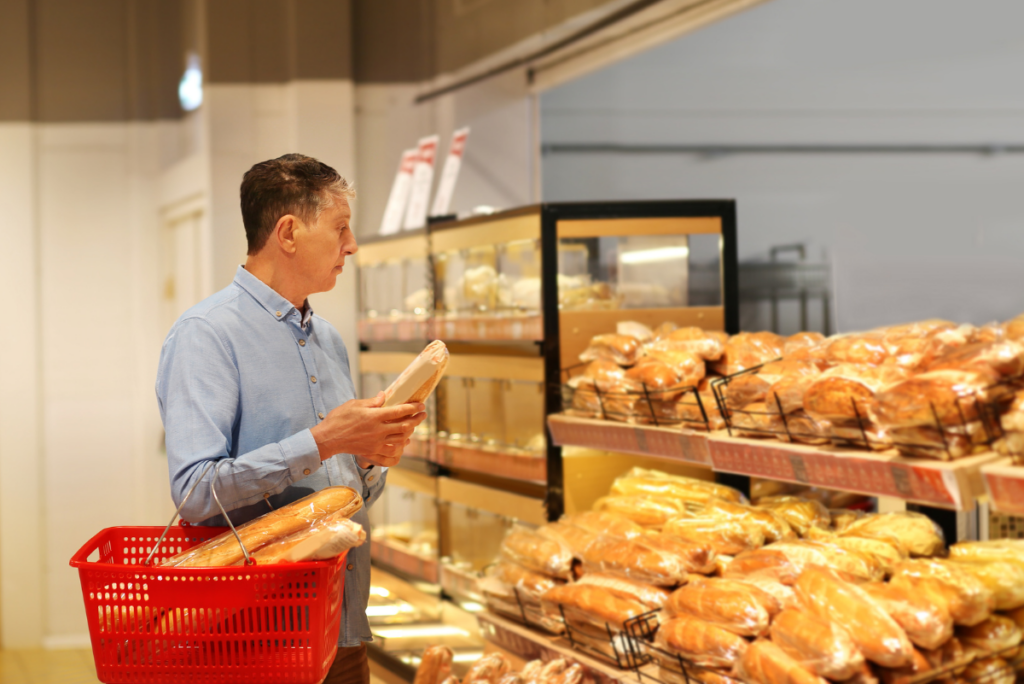
man in blue shirt holding red shopping basket evaluating perimeter bread options
BY: Maggie Glisan

Maggie Glisan

KANSAS CITY, MO — What does a consumer want when they reach for a cookie? The answer
used to be simple. It needs to look appealing. The price needs to be reasonable. And it’s got to taste good, especially if a baker wants a repeat purchase. But now, there’s more to the story. Today’s consumer is looking at that cookie through a different lens. One with filters for health and wellness goals, ingredient transparency and flavor experience. It’s a lens for value, but not value as in “cheap.” Value as in, “Does this matter to me?”

“Consumers do not equate value with the lowest price,” said Shelley Balanko, senior VP at Hartman Group. “In fact, if something seems too cheap, it can undermine the sense of value.
They’re thinking about relevance: ‘Is this something my family will actually use? Is it good quality? Does it contribute to waste?’ In the current economy, people are being intentional, but that doesn’t necessarily mean cheap.”


Advertisement

Finding value

Value is never just a price-to-benefit calculation; it is deeply subjective, based on what consumers care about most. According to Hartman Group, 35% of consumers say they choose the best-quality items regardless of price. Sixty-two percent will pay more for a product that saves time, effort or mess. Thirty-one percent are willing to spend more just to shop somewhere more pleasant.

This is the challenge and the opportunity. Grocery prices remain roughly 40% above 2019 levels. A dozen eggs that cost $1.55 that year can now run close to $4, and the “post­inflation hangover,” as Hartman Group describes it, is very much still being felt. But consumers aren’t simply cutting back. Instead, they’re making sure every dollar counts in terms of health, experience, flavor and quality.

Anne-Marie Roerink, president of 210 Analytics, noted that shoppers have returned to meal planning behaviors, sticking more closely to lists and purchasing only what they need. Lower-income households are absorbing the greatest financial strain and trading down from mainstream brands to private label and smaller pack sizes (even though unit purchases have actually ticked upward). They’re spending more carefully, not necessarily spending less.

Bakery has always thrived on impulse purchases, but that’s taken a hit as well.

“Being planned and included on the pre-trip list has become far more critical,” Roerink said.

The Tuesday morning donut grab or the “These cookies just looked so good, so I tossed them in my cart” moments may take more work to earn.

“Private brands have innovated. They built out tiered offerings and raised their quality standards." — Shelley Balanko | senior VP | Hartman Group

Advertisement

Private label blooms

Since the pandemic, private label’s rise has been well-documented.

“Private brands have innovated,” Balanko said. “They built out tiered offerings and raised their quality standards. Now, the experience for many shoppers is genuinely on par with — and sometimes better than — the national brand equivalent. The quality is what’s keeping them there.”

Walmart’s Bettergoods launch offers a clear illustration of this evolution. Unlike the retailer’s Great Value line, which competes on price by mimicking national brands, Bettergoods is positioned as a premium private label brand, with innovative flavors, plant-based options and “free from” offerings priced slightly above Great Value. The results are worth noting: Low-income households were
34% more likely to purchase Bettergoods compared to Great Value shoppers, and high-income households were 20% more likely.

Roerink sees the same dynamic playing out more broadly. In fresh bakery, brand loyalty tends to align more closely with retailer loyalty, creating significant opportunity for grocers who invest in their own programs. In some segments like pretzels, manufacturer brands are still driving the biggest growth. But in others, private label is out­performing. For commercial bakers, the message isn’t to worry; it’s to up their game.

Advertisement

Amid the backdrop of inflation and unsteady economic conditions runs what Balanko describes as a structural change in consumer consciousness that predates the pandemic and the GLP-1 boom. Hartman Group research found that anxiety had already overtaken weight management as the top health condition consumers were actively managing back in 2019. The events of the past several years have only intensified that underlying unease, and food has become one of the primary ways in which people try to regain a sense of control.

“Consumers are vastly more aware of their choices when it comes to food,” Balanko said. “And they understand the impact it has not just on their health but also in every aspect of their lives.”

This shift is being accelerated by the rise of GLP-1 medications. When every calorie has to count, the emphasis on nutrient density intensifies. Users of GLP-1 drugs are simultaneously more skeptical of highly processed foods and more attentive to protein and fiber claims. The catch, Balanko noted, is that consumers are quickest to trust claims that feel grounded in real ingredients.

“The more it feels like marketing,” she said, “the more it gets filtered out.”

Some are calling it nutrient “maxxing.” It’s the idea that every bite should work harder — deliver more protein, more fiber, more functional benefit — and it has moved beyond wellness circles and into the mainstream.

This story has been adapted from the 2026 New Products Annual of Commercial Baking. Read the full story in the digital edition here.

Related News

Advertisement

Advertisement

Advertisement

Advertisement

Popular Articles