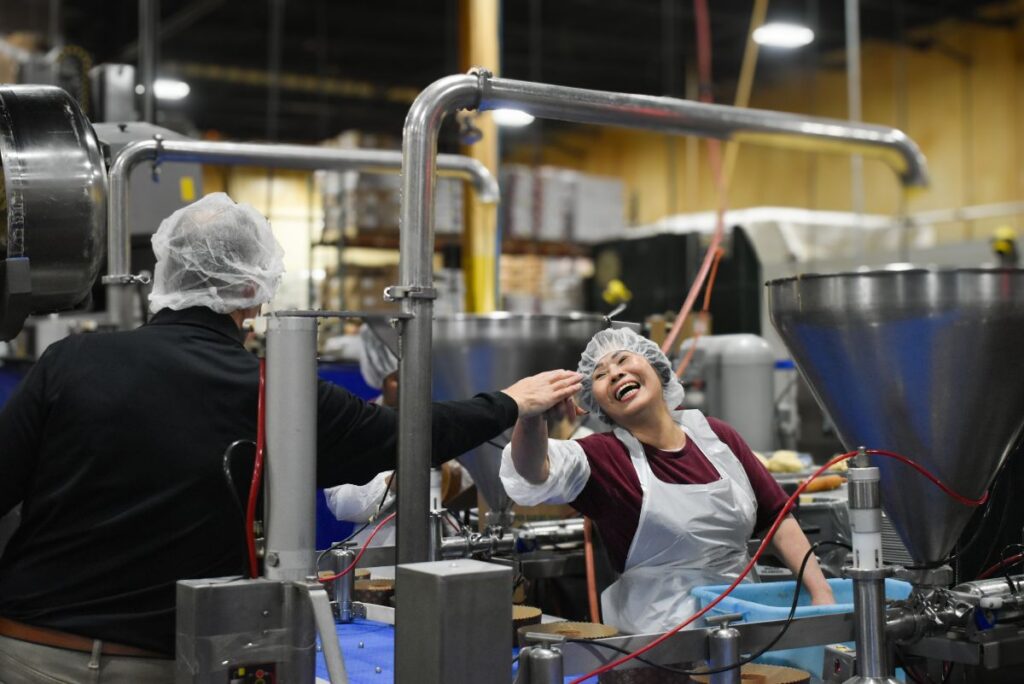
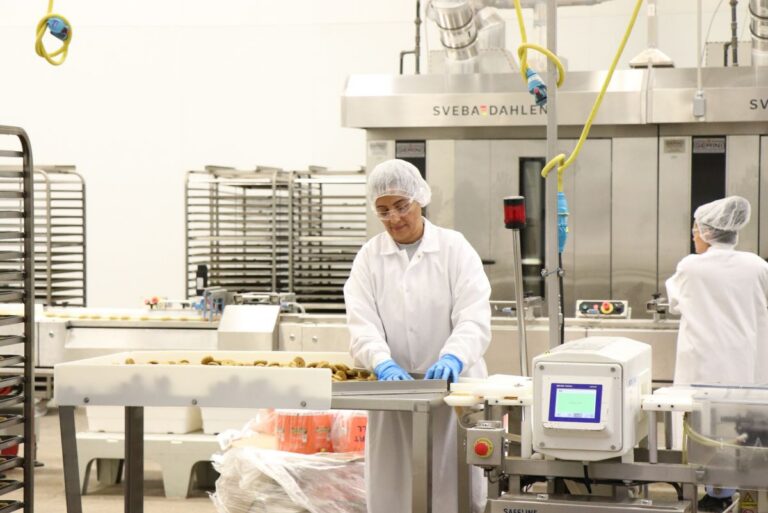
Even with a wide range of SKUs — 150 and counting — the bakery is committed to preserving many of the hands-on techniques that deliver the texture, character and authenticity its customers expect, integrating automation where it makes sense.
“The balance between hands-on and automation is what attracted me to Boston Baking,” said Carla DePina, director of operations. “We are very careful with adding automation. We don’t automate to replace people; it’s to give them an opportunity to grow. That’s our culture. That’s our mission.”
At the same time, the Boschettos recognize that if they want to grow the business, automation must be part of the equation. In 2025, Boston Baking doubled the amount of capital it typically invests in equipment each year, adding an Empire spiral mixer for pie dough, two ProBAKE mixers, a Reiser HP depositor and break-and-bake cookie system, and a RONDO sheeter.
In the first quarter of this year, the company added a Wexxar tray former and ID Technology C-wrap and label print system from ProMach. And it took its first foray into AI with a Tutor Intelligence palletizing robot named Vega.
“We’re at that level of baking where we’re going to explode and grow,” said John Fisher, Boston Baking’s R&D pastry chef and the lead for identifying areas in need of automated solutions. “We know the future is AI, and we know that robotics is being used more and more in the bakery industry. We asked, ‘What can we jump into that’s not so scary?’”
Vega is one of the first AI-driven — vs. program-driven — robots in the industry. Tutor Intelligence’s rental program offers a low barrier of entry, allowing customers to get accustomed to AI palletizing technology without having to make a significant capital investment. Fisher said the team uploaded a picture of a preferred pallet configuration to Vega, and the robot immediately started to build it, learning how to correct its mistakes along the way.
“One of the reasons for bringing AI into the company is to help integrate the future of the bakery,” Fisher said. “It also improves the work lives of our team members. We want to make sure they still have positions and still feel like they are part of the company. We can move them from a simple job, such as stacking, into another position — like baker or line lead — where they can grow and help support our objectives.”
This story has been adapted from the 2026 New Products Annual of Commercial Baking. Read the full story in the digital edition here.