

Advertisement

Geared up for growth: Fresca Foods’ pod-style approach

Geared up for growth: Fresca Foods’ pod-style approach
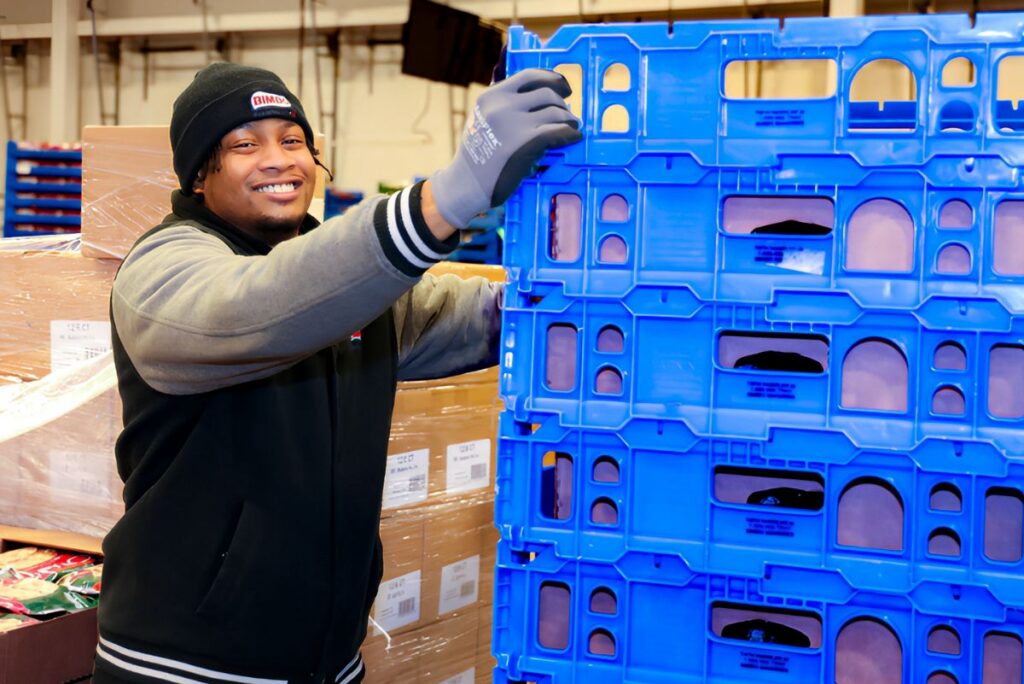
PHOTO BY OLIVIA SIDDALL | AVANT FOOD MEDIA
BY: Mari Rydings

Mari Rydings

KANSAS CITY, MO — Long before the words “natural,” “organic” and “better for you” joined mainstream conversation, Boulder County, CO, had established its reputation as a health food mecca. Today, the area remains the epicenter of this burgeoning category, serving as home base for several producers, including Louisville, CO-based Fresca Foods, a healthy snacks co-manufacturer that has grown from an entrepre­neurial venture into a concept-to-shelf operation serving some of the largest brands in the food industry.

The company’s baked goods portfolio holds a handful of core prod­ucts: bars and bites, granola, cereal, and specialty crackers. It part­ners with customers needing to hand off excess capacity as well as those wanting a co-man to handle 100% of their manufacturing. It’s all done through a pod-style production system consisting of 10 dedicated spaces and 18 manufacturing lines across two facilities in Louisville. Two warehouses in nearby Aurora, CO, bring total square footage to 350,000.

Scaling snacks

Recently, Fresca announced a partnership with Cerealto, a European biscuits, cereals and snacking bars co-manufacturer with facilities in Portugal, Spain, the United Kingdom and Mexico. While the US co-man wasn’t actively looking for a partner, when the opportunity presented itself, the partnership made perfect business sense.
Advertisement

“We’ve been a privately held company since day one — 20 years ago — and we could have kept going on our own,” said Brandon Viar, Fresca’s CEO. “But we had a vision for the company and bigger plans. Cerealto has similar values, categories, growth beliefs and a customer-centric focus. This partner­ship will help accelerate growth in high-demand snacking categories, whether it be the ones both parties play in currently or new ones we can explore.”

By helping both companies scale manu­facturing services and innovation capa­bilities, the trans-Atlantic deal will give Cerealto a foothold in the US and vice versa for Fresca.

Historically, Fresca’s business model has been to scale with its custom­ers, upgrading equipment piecemeal on an as-needed basis. Even though the company entertains almost any idea that comes its way — that’s the entrepreneurial spirit shining through — every potential product is viewed through a lens of feasibility and scalability: What are all the different ways it can be made? How can Fresca grow with it?

“We always go into new projects with the ROI justification in mind,” said Domenic D’Acquisto, business develop­ment representative at Fresca Foods. “We have think-tank sessions to talk about other products we could make with our existing equipment or with minimal investment to expand our customers’ product offerings. We never stop looking for opportunities. We want all lines up and running as much as possible.”

In the pod

Pod manufacturing lends itself well to that goal because it provides the flexi­bility needed to move equipment around to support different types of production, manufacture a wide range of snacks and keep allergens separated.

“That’s the beauty of the system,” said Miguel Ramirez, VP of operations. “We can move equipment in and out of the pods, which allows us to make a variety of products. It’s more efficient, and we can produce faster in terms of speed to market.”

Some pods are customized to meet specific customer criteria or manufac­turing needs. For example, specialty crackers, one of the few private label, off-the-shelf offerings in Fresca’s port­folio, have a dedicated pod because three highly customized wafer ovens are required for production.

Other pods, such as the one that manu­factures granola, are multi-customer, meaning they run products with simi­lar processes for different customers. Currently, several customers share the granola pod; that’s a testament to the product’s increasing popularity, with consumers seeking clean-label, better-for-you foods that are high in fiber and protein, GLP-1-friendly, and organic.

Advertisement

“We’ve always made granola, so we were ahead of the trend, especially from a technology standpoint,” said Maria Plata, Fresca’s chief growth officer. “We already had a system in place, and we were ready to grow it.”

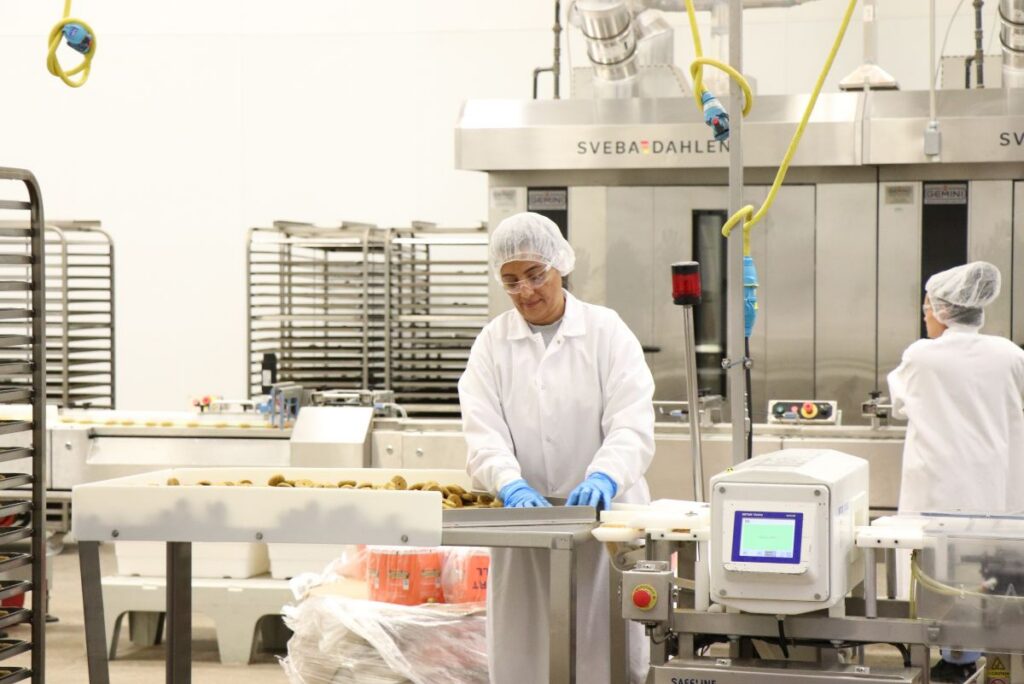
As the granola category exploded, Fresca built a second pod to handle the growing business. The larger space processes 60,000 pounds of granola a day across two shifts, manufacturing a range of cluster sizes and varieties. Twelve identical Sveba Dahlen rack ovens comprise “Oven Alley,” creating operational efficiency and consistency for the final product.

Manufacturing in a pod environment requires a high level of organization and planning. Every item has a customer-based playbook, and the operations and human resources teams meet weekly to review upcoming production needs and make assignments in terms of equipment and people.

“We do a lot of cross-training so we can move people to differ­ent pods without losing efficiencies,” Ramirez explained. “We scale our associates like we scale products. They learn in a certain production room, but there are opportunities to learn different ones. Cross-training helps balance our labor needs with our production runs in a cost-efficient way without adding a lot of overtime.”

This story has been adapted from the April | Q2 2026 issue of Commercial Baking. Read the full story in the digital edition here.

Advertisement

Related News

Advertisement

Advertisement

Advertisement

Advertisement

Popular Articles