


Advertisement

Texture, premiumization drive innovation in R&D

Consumers shopping for texture and premiumization
BY: Maddie Lambert

Maddie Lambert

KANSAS CITY, MO — “What do consumers want?” This is the ever-present question many R&D teams across the commercial baking industry face on a daily basis. Cravings change from sweet to savory, and portions change from permissible to party-sized.

Consumers today spend their dollars on more than just flavors and portions, however. They’re shopping for unexpected experiences and multi-sensory textures. And while commercial bakers are quick to respond to these demands, economic shifts and technological advancements reshape how products are created.

In the Taste and Texture: What’s Tempting Consumers in 2026 webinar, hosted by Confectionery News, Norberto Chaclin, chief R&D officer for Mondelez International, dug into how the company’s snack brands — which include OREOChips Ahoy!RITZ and Clif Bar — shape product formulation to usher in a new frontier of snacking.

Tapping into local purchasing behavior

While Mondelez ensures its products are largely the same worldwide, the R&D teams fine-tune flavor profiles to tap into regional preferences for sensory attributes and sweetness levels. Trends, whether short- or long-term, have a point of origin, and this is important to consider.

“The same trend is not immediately applicable everywhere,” Chaclin said. “For example, a flavor trend in China, where we have a huge OREO portfolio, will be very different from what we might do in the US. The local insights allow us to take a brand like OREO and add a locally relevant twist to the flavor experience.”

Advertisement

While the trend may, in time, travel to other parts of the world, incorporating it into select portfolios enables Mondelez to remain flexible with R&D, and that is a winning strategy for companies with a global market presence.

The need for texture and premiumization

When it comes to methodologies for sensory tools in developing new textures, the baking company separates them into two categories: analytical and consumer. Many consumers have an emotional attachment to textured snacks, which can make it difficult to characterize a specific product objectively.

According to Chaclin, when addressing texture challenges, R&D teams should turn to gum.

“Gum is the only food product that you chew for an extended period of time,” he said. “The consumer really thinks about the texture of that product, not just the initial bite. So, because of that, we’ve designed our own robot called a ‘chew box’ that we put the product in and measure the force of chewing.”

Whether for 5 or 10 minutes, the aforementioned chew box shows the team how the texture changes over time. This helps Mondelez characterize texture beyond a one-dimensional playing field and better understand how to retain texture integrity throughout a product’s lifecycle.

“Bring two elements together and create layers of complexity that make the product more interesting to consumers.” — Norberto Chaclin | chief R&D officer | Mondelez International

Advertisement

When dealing with the notion of “premiumization,” there are two realities for R&D teams to juggle: one in which premium means more expensive and luxurious, and another in which it also means a more complex, sensorial product. Chaclin emphasized that both realities can coexist.

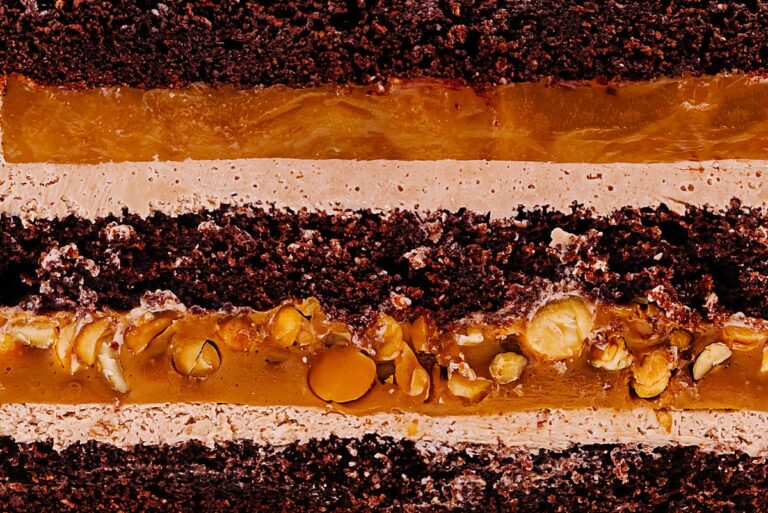
“If you think about the Dubai chocolate trend, it’s not necessarily a fancier chocolate; it’s just more complex, and it gives consumers a completely different eating experience,” he said. “That’s a form of premiumization.”

While marketing and packaging are certainly part of how consumers perceive a specific product, the behind-the-scenes work is just as important. Adapting flavor and texture to be perceived as premium includes delivering a familiar product while introducing consumers to new ways to eat it.

Advertisement

“Bring two elements together and create layers of complexity that make the product more interesting to consumers,” he said. “We do that quite effectively with OREO, particularly in our large markets, such as the US or China, where we’ve introduced any number of fillings and inclusions and multiple layers, and all of those add elements of flavor and texture together to create new and novel experiences.”

Consumer purchasing behavior is complex; the products they buy and the products they want need to align. Whatever the objective, whether experimenting with texture or flavors, innovation happens when R&D teams can tap into these demands and shift production accordingly.

Related News

Advertisement

Advertisement

Advertisement

Advertisement

Popular Articles