
Advertisement

Tailored messaging, labels appease the skeptical consumer

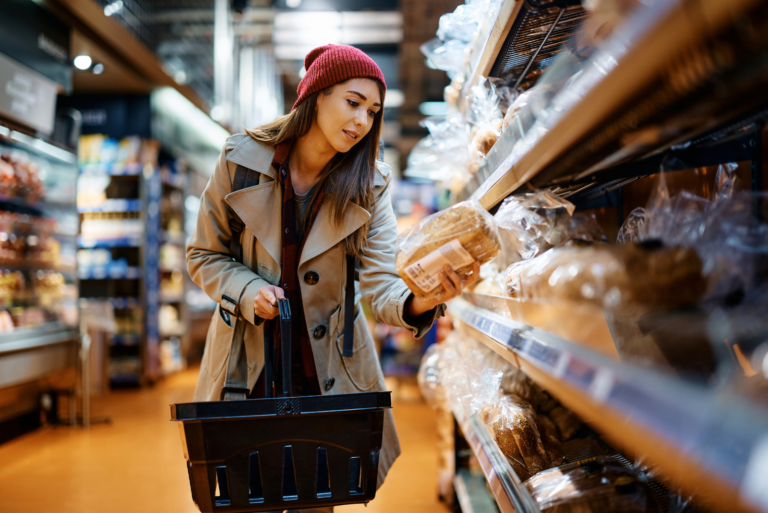
Skeptical consumer reading tailored messaging and product label
BY: Maddie Lambert

Maddie Lambert

CHICAGO — It’s a tale as old as time. Or, at least, as old as the start of modern consumerism.

Food labels and informational messaging have a hot-and-cold relationship with consumers. One minute, labels are checked only to verify protein or fiber count. Next, there’s a full analysis of all the ingredients and processes behind the product, and phones are in-hand, ready to search for clickbait on the industry’s latest pariah.


Advertisement

During the American Society of Baking’s BakingTECH conference, held Feb. 17-20 in Chicago, Kendall Howie, PhD, principal food scientist at Middleby’s Bakery Innovation Center, discussed this paradox in relation to findings from a national US consumer study conducted as part of doctoral research. The study evaluated consumer responses to food labels and informational messages related to electron beam food processing, a technology with applications in food safety and shelf life extension.

The study found that consumers’ willingness to pay (WTP) for food was significantly affected by the framing of product information and benefits. Messages emphasizing safety and quality were particularly effective among women and older adults, whereas men and younger consumers were more responsive to a wider range of messaging approaches.

What does this mean for commercial bakers? Product labels still have the most sway over consumers, and uncertainty and comprehension gaps can dissuade the uninformed shopper.

“We’ve heard it time and time again: ‘If I can’t pronounce an ingredient in a product, or if I don’t understand it, I’m not going to buy it or put it in my body.’” Howie said. “Labeling is what leads to food technology neophobia; we have these danger cues due to limited public exposure and education.”

“You can use value signals to emphasize benefits that consumers consistently seek … reducing your risk by validating these messages before making major investments in reformulation or technology innovation.” — Kendall Howie, PhD | principal food scientist | Middleby’s Bakery Innovation Center

Advertisement

Consumers appreciate a more “tell, don’t show” approach, which means that, while they expect their food to be safe, they also want to understand the messaging behind the product that makes it safe. Howie’s study found that with irradiation warnings, safety was the most influential messaging, followed by quality and then convenience.

“Simply saying that your product is safe isn’t doing much,” Howie said. “Within the context of a novel food processing technology, where consumer trust is limited or consumer knowledge is uncertain, messaging can be used to market said technology.”

Word choice is an important factor here. When examining the findings, Howie found that the word “processed” was preferred when brands were marketing the convenience of a product, but for quality, “irradiation” was the preferred messaging.

Advertisement

“That shows that depending on what you’re saying and what you’re trying to communicate, it influences how consumers respond to the words you use,” Howie said. “Any information increased the WTP when compared to no information.”

Wording influences how CPG brands message their products, but it also impacts how consumers evaluate product safety, product quality and overall value of their purchase. When consumers trust a brand, they’re more likely to make repeat purchases.

“You can turn these insights into action with tailored messages,” Howie said. “You can use value signals to emphasize benefits that consumers consistently seek based on who you’re willing to target, and you can also venture into evidence-based innovation, reducing your risk by validating these messages before making major investments in reformulation or technology innovation.”

For CPG brands, tailored messaging includes benefit framing, such as callouts for higher protein counts or a gluten-free format, and language around unprocessed, minimally processed or under-processed food will resonate with consumers as they seek recognizable, clean labels. Highlighting natural sourcing and using QR codes to provide detailed, traceable information can also drive sales for brands targeting health-conscious consumers.

By leveraging ingredient transparency and educational messaging, commercial bakers can position themselves as trustworthy brands in a competitive (and skeptical) market.

Related News

Advertisement

Advertisement

Advertisement

Advertisement

Popular Articles