

Advertisement

Kind’s almond initiative solidifies regen ag scalability

Kind’s almond initiative solidifies regen ag scalability
GRAPHIC COLLAGE BY AVANT FOOD MEDIA
BY: Lily Cota

Lily Cota

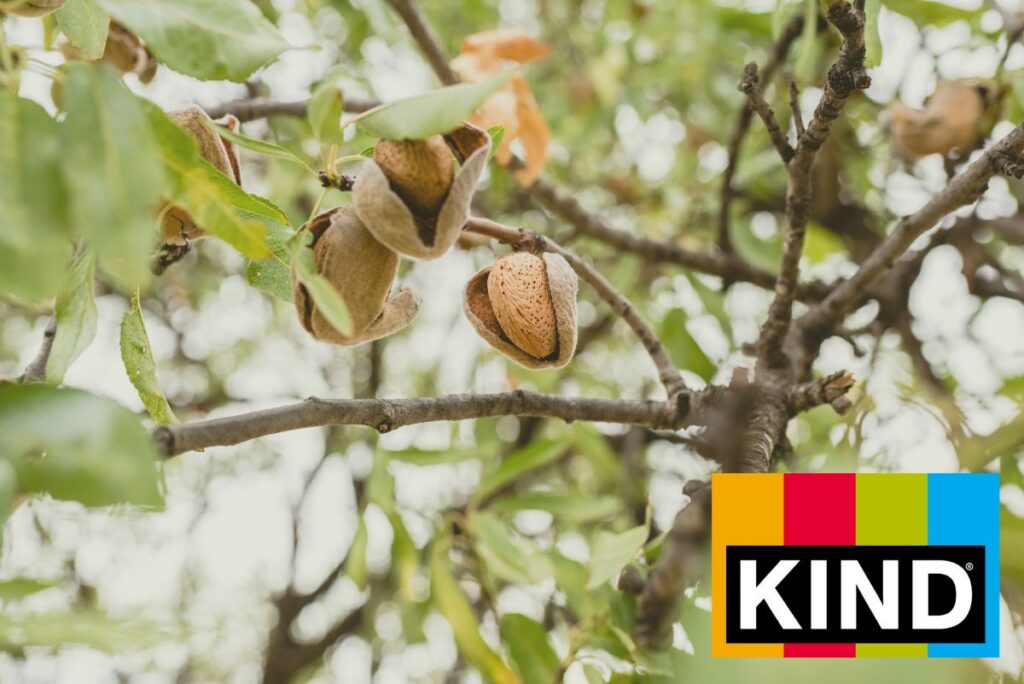
NEW YORK — In recent years, KIND has taken significant steps toward future-proofing its supply chain, bolstered by the launch of the KIND Almond Acres Initiative in 2023. The three-year regenerative agriculture pilot, created in partnership with ofi, was the key first step in KIND’s commitment to sourcing 100% of its almonds from farms using regenerative agriculture practices by 2030.

The pilot is coming to a close, and the results are in. As of 2026, KIND has successfully scaled regenerative agriculture practices across its almond supply chain, sourcing approximately 50% of its almond volume from farms leveraging these practices on a mass-balance basis. The milestone puts the brand on track to achieve its 2030 goal.

“We are incredibly proud to hit the halfway mark in our almond sourcing pledge,” said Daniel Calderoni, CEO of KIND North America. “The KIND Almond Acres Initiative has proven that regenerative agriculture is a scalable, operational engine. By sharing our outcomes and learnings, we are aiming to move the needle in encouraging the industry to build a more sustainable supply chain — one that’s better for the planet and for business.”
Advertisement

“The KIND Almond Acres Initiative has proven that regenerative agriculture is a scalable, operational engine.” — Daniel Calderoni | CEO | KIND North America

Advertisement

In addition to achieving 50% sourcing of almond volume from farms leveraging regenerative agriculture practices on a mass-balance basis, key results in the pilot include:

  • Increased water use efficiency: The pilot drove a 19.5% efficiency gain in water management.
  • Reduced reliance on costly inputs: Reduced the need for nitrogen fertilizer by 33%, demonstrating that regenerative soil management is a direct driver of operational efficiency.
  • Reduced overall carbon intensity: After the three-year pilot, the acres saw a decrease in overall carbon intensity of 28%.
  • Improved soil health: Marked improvements in soil health metrics like increased soil, organic carbon and decreased compaction were demonstrated across all pilot plots.

KIND is one of the nation’s largest almond buyers, sourcing millions of pounds each year. Through the KIND Almond Acres Initiative, the company tested regen ag practices and innovative technologies in California to better understand the process and discover what can be scaled.

Following three years of data collection, including data provided by ofi’s Carbon Trust-certified Digital Footprint Calculator, the pilot’s results demonstrate that combining regenerative agriculture with new technologies can drive critical outcomes. This includes carbon reduction, improved soil health, and greater water and nitrogen use efficiency. KIND will use these learnings to inform its trajectory and support broader regen ag adoption across the industry.

Because there isn’t a one-size-fits-all approach to regenerative agriculture, KIND’s learnings can be adapted to help industry members better understand what works where and under what conditions.

“KIND is moving quickly from a test environment to large-scale implementation,” said Zac Ellis, senior director of agronomy at ofi North America. “In almond orchards, a variety of regenerative practices such as cover crops, lower-carbon fertilizers, compost, and biochar can directly enhance ingredient quality and resilience. We are proud to partner with KIND to help demonstrate a model that can be replicated and scaled across the broader industry.”

In alignment, Mars, the parent company of KIND, recently released its “2025 Mars Sustainable in a Generation Report,” announcing that all its US operations are now powered by 100% renewable electricity.

Advertisement

Related News

Advertisement

Advertisement

Advertisement

Advertisement

Popular Articles