

Advertisement

How EPR could impact food safety and quality

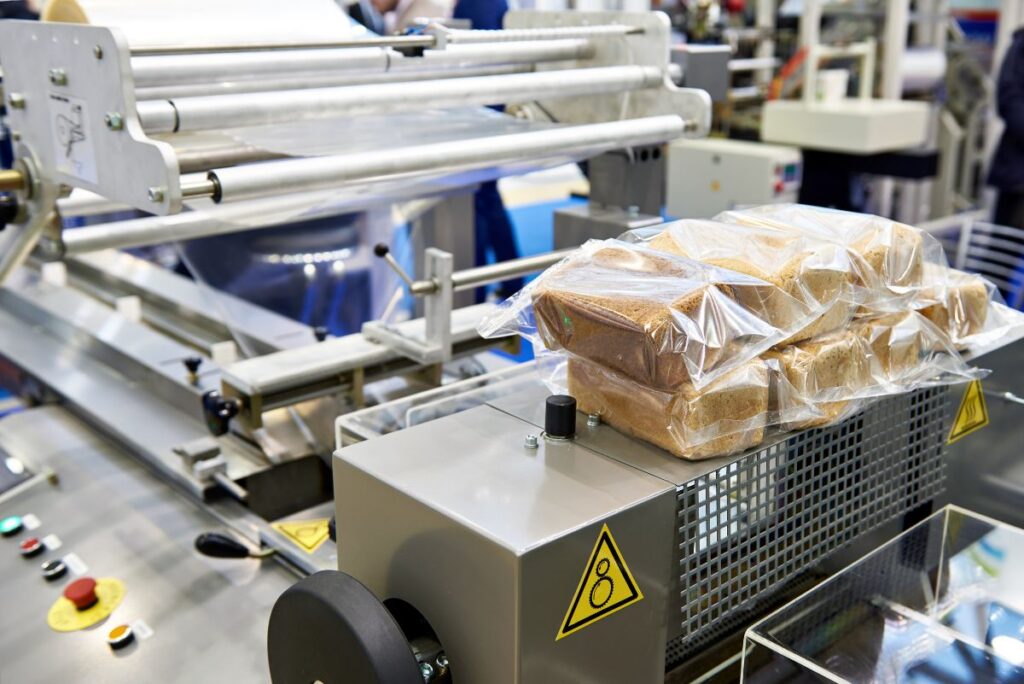
bagged bread on a production line
GRAPHIC COLLAGE BY AVANT FOOD MEDIA
BY: Mari Rydings

Mari Rydings

Read more about EPR in “Every Pound Counts,” featured in the digital edition of Commercial Baking’s June 2026 New Products Annual.

CHICAGO — Extended Producer Responsibility (EPR) environmental policies have been around for decades in the US, and for the most part, they’ve focused on hazardous waste disposal. That focus has shifted to include paper and consumer packaging, with seven states activating laws that now hold CPG companies — including commercial bakeries — financially responsible for the lifecycle of their packaging.

That number is growing quickly. At least eight additional states are expected to move EPR bills forward this year, and it’s predicted that in the next five years, about half of US states could have regulations on their books.

Currently, compliance requires companies to track the type and weight of the packaging materials they send into markets with EPR laws. The collected data is submitted to a third-party Producer Responsibility Organization that monitors compliance and assesses fees based on the weight of the packaging material, material type, level of recyclability or compostability, and ease of processing within existing systems. These initial steps make data and financial commitments two immediate obligations for producers.
Advertisement

As these sustainability-focused policies move through their multi-year implementation phases, compliance requirements will become stricter. EPR regulatory experts such as Colin Preston, managing consultant with Ramboll Management Consulting, warn that these efforts to drive the circular economy forward could compromise food safety.

During his recent IFT FIRST 2026 presentation, Preston explained that the goal of EPR laws is total reduction of packaging, which can be incentivized directly with source reduction goals or indirectly with fees that make it economically impractical for manufacturers to have a large amount of packaging in the supply chain.

“The conservation of packaging materials needs to be driven by what food packaging is required to maintain safety and quality.” — Colin Preston | managing director | Ramboll Management Consulting

Advertisement

Yet, Preston noted, achieving those source reduction goals by incentivizing thinner films or thinner container walls, transitioning to lighter-weight resin with lower density, and removing non-functional elements such as window displays, bags, handles or advertising could negatively impact food safety.

“The conservation of packaging materials needs to be driven by what food packaging is required to maintain safety and quality,” he said. “When we talk about perishable items, lightweight, conveyed packaging is more susceptible to deformation during shipment and storage. That can lead to failure and microbial contamination. Sometimes, replacing materials is not an automatic substitute in terms of performance.”

Advertisement

Maintaining food safety and quality are factors that must be considered whenever discussions involve creating packaging that incorporates recycled content, helping food and beverage manufacturers transition to recyclable and reusable formats and reduce total amounts of packaging.

“By 2030, there’s going to be a major impact on the type of packaging that’s available,” Preston predicted. “These restrictions will continue evolving through 2040, manifesting in 70 percent of transport packaging being reusable, with 100 percent of all transport packaging being reusable internally.”

Related News

Advertisement

Advertisement

Advertisement

Advertisement

Popular Articles