


Advertisement

Health conversations guide consumer spending

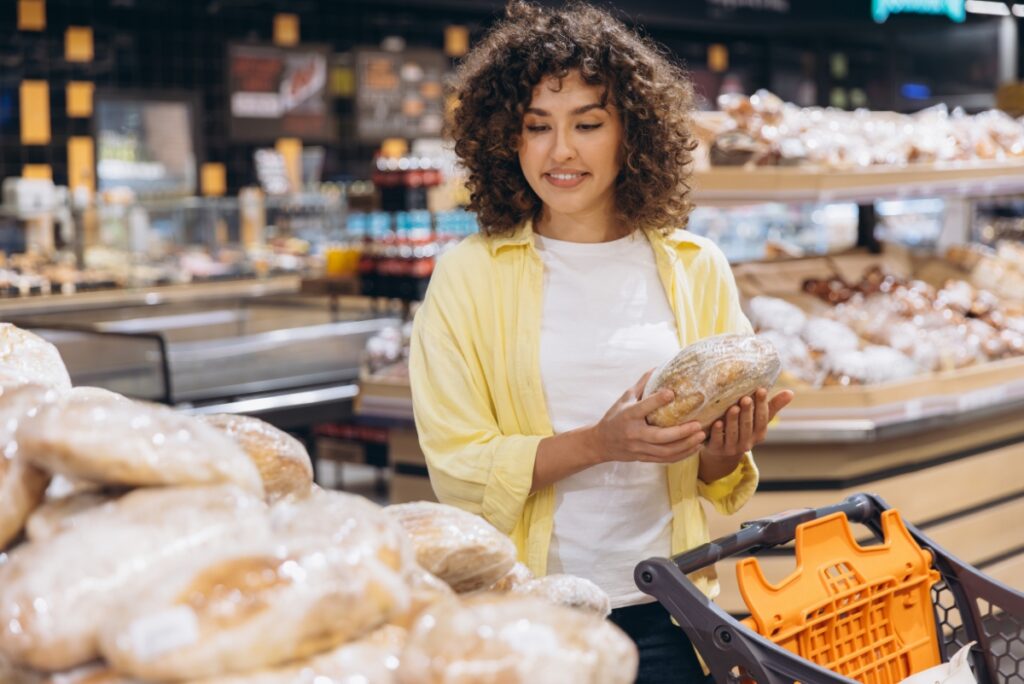
Consumer buying healthy bread at grocery store
PHOTO BY ANATOLIYCHERKAS | ADOBE STOCK
BY: Maggie Glisan

Maggie Glisan

KANSAS CITY, MO — Protein’s reach reflects the concept of “nutrient maxxing,” spanning every gender, age, income and ethnicity. According to Circana, one-third of consumers are actively seeking new high-protein foods, up six percentage points since 2021.

Tastewise data puts more specificity on the demand in bakery: Protein- and fiber-rich baked goods requests grew 30% year-over-year, with high-protein appearing in roughly one in four occasions. Specific ingredients include dark chocolate (up 11%), cottage cheese (up 9%), almond flour (up 8%) and blueberries (up 31%). Emerging interest in protein-enriched bread and buns is extending this demand into more everyday bakery formats.

Fiber, though seemingly on the tip of everyone’s tongue, is a different story. Shelley Balanko, senior VP at Hartman Group, described it as a continuum: Mainstream consumers understand gut health in basic, practical terms, but the more sophisticated language of prebiotics, the microbiome and the gut-brain connection hasn’t broadly broken through yet.

“The current conversation around fiber is honestly less mature than the one around protein,” she said, “but there’s a lot of energy building.”


Advertisement

Data from 210 Analytics reflects that immaturity. Categories typically associated with fiber are down year-over-year, and high-fiber baked goods have not shown notable outperformance. That gap between cultural noise and actual purchase behavior is worth watching.

That said, Balanko expects fiber to move along the adoption curve meaningfully over the next few years, particularly as consumer interest in ingredient purity extends beyond protein.

The chatter around ultra-processed foods (UPFs) is gaining momentum quickly, fueled in part by MAHA messaging and broader consumer skepticism of the food industry as a whole. While “clean eating” as a practice is actually down 20% year-over-year according to Tastewise data, the numbers around specific preferences tell a different story. The term “few ingredients” is growing 80% year-over-year in food occasions, with “refined sugar free” at 82%, and “clean label” at 84%.

Baked goods, though, present a special case when it comes to UPFs.

“Baking — flour, butter, eggs, sugar — of all categories has such an intuitive connection to homemade,” Balanko said. “Consumers understand what goes into it. So, when they look at a label and see a long list of additives and stabilizers, that’s a real disconnect. The ultra-processed stigma lands especially hard in baking for that reason.”

For all the scrutiny consumers are applying to what goes into their food, that doesn’t mean they’re steering clear from all things indulgent. In fact, they may be enjoying those occasions more.

“Americans strongly believe it is perfectly okay to occasionally enjoy baked treats or desserts,” said Anne-Marie Roerink, president of 210 Analytics.

Adding GLP-1 medications to the mix

For some GLP-1 medication users, the drug actually gives them a sense of permission to enjoy a baked good from time to time without guilt.

Tastewise data gives some insight as to why this might be the case. “Craving” as a signal appears in about one in three indulgent baked goods occasions and is growing 147% year-over-year, while “comfort” in indulgent baked goods is up 99% and “cozy” up 87%. When ­consumers eat on fewer occasions overall, the moments when they choose to indulge carry more weight and, therefore, more purchase value.

Even so, consumers maintain a strong appetite for novelty, particularly around flavor.

“Consumers today have a much greater understanding of the strong connection between what they eat and how they feel ... It’s not a trend. It’s a fundamental shift in how people relate to food.” — Shelley Balanko | senior VP | Hartman Group

Advertisement

Tastewise data points to several flavors with strong momentum. Middle Eastern profiles like pistachio-filled pastries, cardamom-scented cookies and tahini-based brownies appear in roughly one in 12 baked goods occasions and are growing 33% year-over-year. Sourdough-influenced baked goods are appearing 35% faster than a year ago. And curry as a flavor in global confectioneries is growing 55% year-over-year, reflecting a consumer appetite for warming spice complexity in sweet goods applications.

Not a trend, a mainstay

Cody Masters, executive chef and EVP of culinary and industrial sales at Everson Spice Co., sees global flavors not as a trend cycle but as an ongoing normalization, particularly as Gen Z, whose buying power is set to peak over the next several years, shapes the mainstream.

“The only real region that matters now is social media,” he said, noting that Gen Z’s influence is pushing complex heat, mashups and “Sweet+” profiles into the mainstream faster than the industry anticipated. Spicy-sweet flavor ­pairings like hot honey caramel apple, ghost pepper vanilla ice cream and habanero cherry cola — combinations Masters said wouldn’t have moved the needle just a few years ago — have found real commercial traction.

The reason behind the faster adoption, he said, is “newstalgia,” the idea of giving a familiar, comfort-driven flavor an unexpected twist. A Hot Honey Apple Fritter. A Mexican Mocha Churro. Nostalgia makes it approachable, and the novelty creates the social moment.

“Applying global flavors into mainstream domestic analogs has become the new norm,” Masters said. “There is a fine line between educating a consumer versus exploiting what already works.”

The picture that emerges is one of intention. Consumers are being more deliberate with their spending, but that doesn’t mean they’re pulling back. Health consciousness is creating a broader demand for products that deliver on nutrition, transparency and relevance. Indulgence remains strong, and the stakes of each splurge are higher than ever. Flavor innovation is generating
curiosity and excitement.

Advertisement

Balanko sees all of it — the nutrient maxxing, the ultra-processed skepticism, the premium on indulgence — as expressions of the same underlying shift.

“Consumers today have a much greater understanding of the strong connection between what they eat and how they feel in terms of their energy, mood and long-term quality of life,” she said. “That consciousness underlies all of it. It’s not a trend. It’s a fundamental shift in how people relate to food.”

This story has been adapted from the 2026 New Products Annual of Commercial Baking. Read the full story in the digital edition here.

Related News

Advertisement

Advertisement

Advertisement

Advertisement

Popular Articles