
Advertisement

ABA, GFF weigh in on revised US Dietary Guidelines

New dietary guidelines include an inverted food pyramid
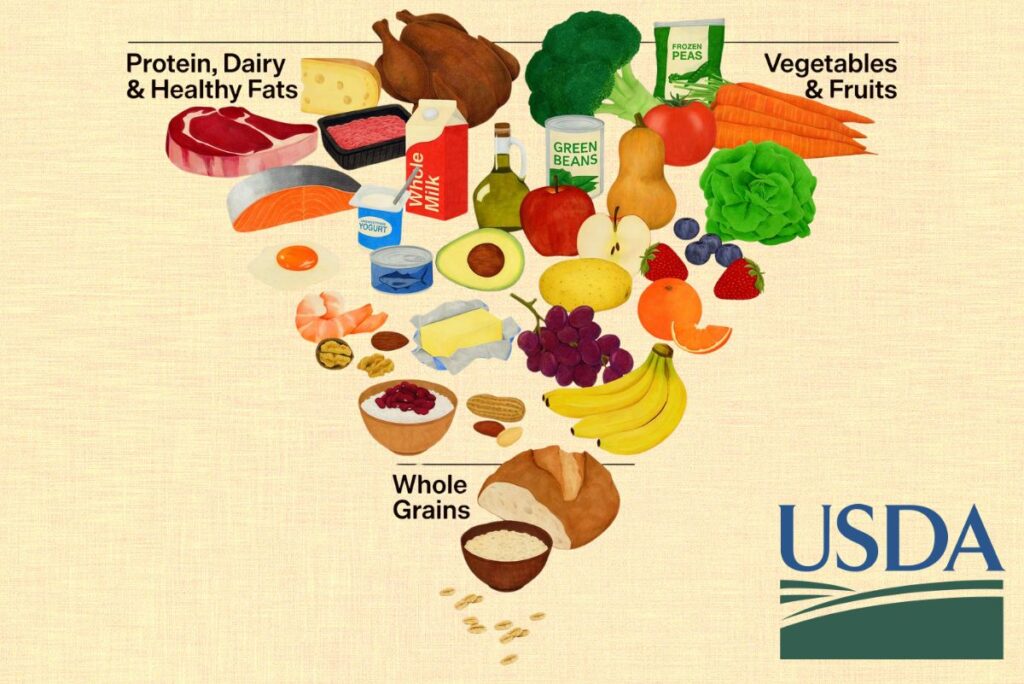
PHOTO COURTESY OF USDA
BY: Mari Rydings

Mari Rydings

KANSAS CITY, MO — There’s been much rumor and speculation over the past few months about how pending revisions to the US Dietary Guidelines for Americans would impact the commercial baking industry in the Make America Healthy Again era. The wait is over, as the Department of Health and Human Services (HHS) released the updated recommendations for 2025-2030 this week.

The revamped guidelines — which include an inverted version of the familiar food pyramid — encourage the consumption of whole grains, fresh vegetables and dairy products, echoing previous nutritional advice. They also recommend that consumers prioritize protein and healthy fats. However, the inverted pyramid now depicts protein, dairy, healthy fats, and fruits and vegetables at the top, with whole grains at the bottom.

“While several recommendations remain familiar, the shift in framing is notable,” said Erin Ball, executive director of the Grain Foods Foundation. “The updated guidelines place an emphasis on whole grains, which aligns with long-standing public health goals. However, they de-emphasize grains overall, and the guidance does not recommend refined and enriched grain foods, thus ignoring their role in nutrient delivery, affordability and how baked goods function in everyday eating patterns.”


Advertisement

“Highly processed” foods

The updated guidelines encourage consumers to limit their intake of added sugar and ultra-processed foods (UPFs), referred to as “highly processed” foods in the document. Specifically, the guidelines warn against eating pre-packaged, ready-to-eat products, including many grain foods.

The FDA and USDA are currently working to create a uniform, federally recognized definition of UPFs. In response to the agencies’ Request for Information last year, the American Bakers Association (ABA)  suggested taking a nutrition-based approach vs. focusing on processing in defining UPFs.

Advertisement

In its response to the release of the updated dietary guidelines, ABA praised the USDA and HHS for recognizing the essential role grains play in a balanced diet but expressed concerns over their positioning in the new recommendations.

“While ABA is disappointed to see certain staple grain foods cited as examples of highly processed, refined carbohydrates, it will continue educating USDA, HHS and policymakers on how this characterization does not fully reflect these baked goods and their affordability and accessibility to all communities nationwide,” the association said in a prepared statement.

Advertisement

Access and affordability

Ball called into question the real-world applicability of the new guidelines for consumers overall, including the access and affordability of grain foods.

“The guidelines place stronger emphasis on food purity and reduction-focused guidance, with less attention to real-world access, affordability and how Americans typically build meals,” she said. “As a result, the guidance introduces areas of tension that warrant closer examination, particularly for staple food categories like grains.”

The revised US Dietary Guidelines present opportunities and challenges for commercial bakers. Industry stakeholders can contact ABA and GFF for support with clear, evidence-based messaging and resources they can use to educate consumers about the benefits of incorporating grain foods into their diets.

Related News

Advertisement

Advertisement

Advertisement

Advertisement

Popular Articles