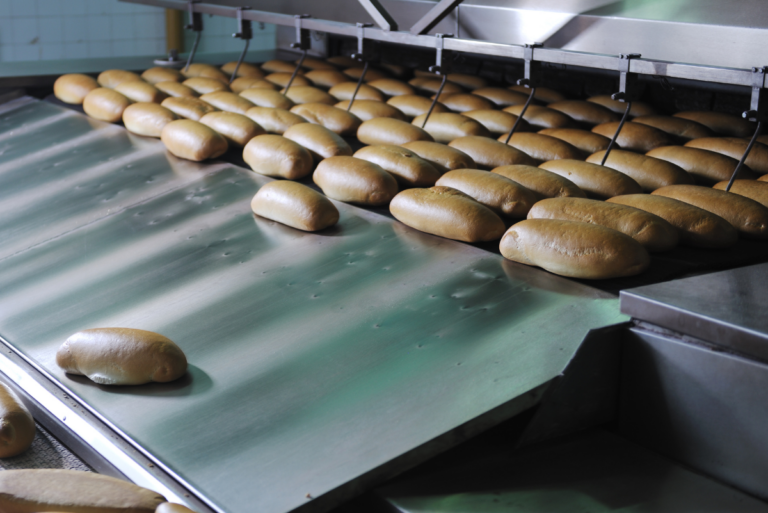


KANSAS CITY, MO — From California to New York, the movement to ban potassium bromate is picking up steam. Long used as a dough conditioner to increase loaf volume and oven spring in long-fermentation, freeze-thaw and long-retarded doughs, bromate has proven valuable in the baking industry.
Yet, this commonly used flour additive is a known carcinogen that’s already been banned by countries in the European Union, as well as Canada, China and the United Kingdom. In the US, a combination of government regulations and consumer interest in cleaner labels and ingredient transparency has bakers looking for alternatives.
While many mid- to large-volume bakeries no longer use bromated flour, smaller bakeries, including retail bakeries, must figure out how to reformulate using unbromated flour without compromising finished product quality. The good news is that there are several options.
“Don’t panic,” said Shawna Goldfarb, the northeast regional sales manager for King Arthur Baking Co., during The Bread Bakers Guild of America (BBGA)’s most recent Guild Office Hours webinar, Preparing for Bromate Bans. “Most of the time, if you run your dough with an unbleached, unbromated flour, you might see only a slight difference, if one at all.”
That’s because most of the milled flour that bakers use contains bromate in the 15 ppm range, an amount that usually has minimal impact on the dough process. That’s why Tim Pohlman, director of quality at Bay State Milling, who also participated in the BBGA webinar, suggests running a few tests before turning to bromate replacers.
“Run a dough keeping everything the same, but without the bromate, and see what the results are,” he said. “If you don’t see a difference, you’re good to go. In my experience, between 70% and 80% of customers don’t really see a difference.”