
Advertisement

How commercial bakers can get ahead of product reformulation

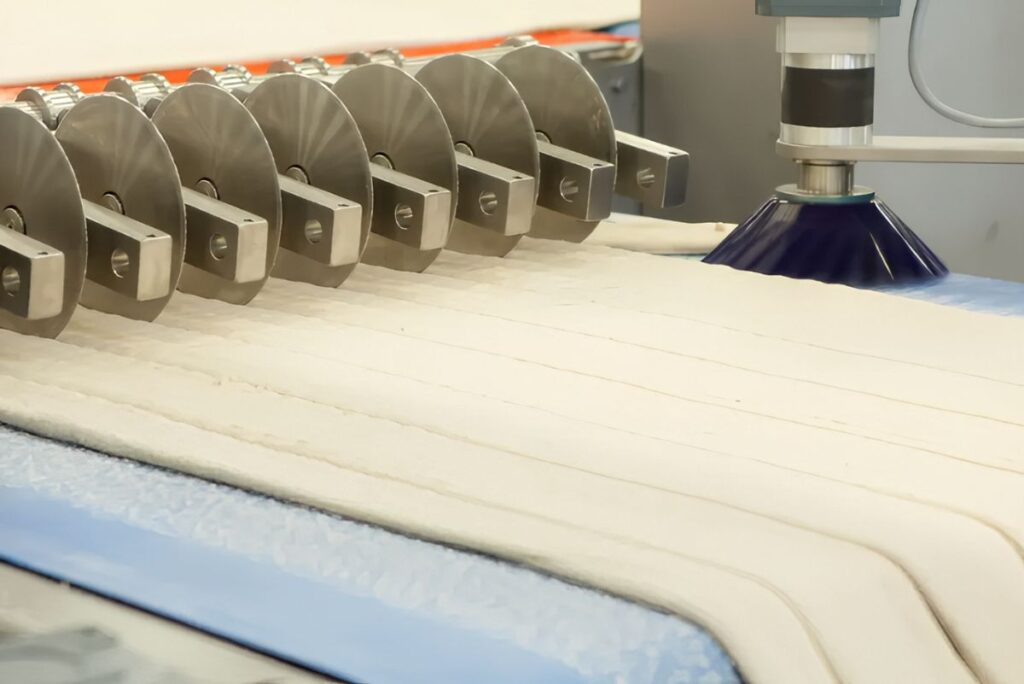
Puratos' Industrial Pilot Bakery plant equipment to help commercial bakers with reformulation
PHOTO COURTESY OF PURATOS USA
BY: Maddie Lambert

Maddie Lambert

KANSAS CITY, MO — Puratos recently launched its Industrial Pilot Bakery, powered by AMF Bakery Systems, to accelerate product devel­opment from concept to commercializa­tion. The facility combines AMF’s bakery equipment and integrated automation solutions with Puratos’ ingredient know-how and recipe formulation for quicker speed-to-market.

After all, time isn’t on the baker’s side when changing up the ingredient deck in today’s regulatory uncertainty, especially when a reformulation isn’t necessarily by choice. Bakers have been reading the tea leaves on red dye, but legislation these days seems to be changing faster than consumers change their minds.
Advertisement

Take the FDA’s recent regulation on food coloring and synthetic dyes, for example. That may have left some R&D teams in a scramble. In either the worst- or best-case scenario, success comes down to having a playbook that outlines ingredient analysis in advance. This enables R&D to complete easier and quicker replacements that build on past projects for future applications.

“Stay close to your procurement department so you’re constantly forward-looking about new technologies,” said Jeff Gholson, senior VP of procurement at Minneapolis-based Rise Baking Co., during the International Dairy Deli Bakery Association’s Quarterly Bakery Commodities Update, August 2025 webinar. “Have a complete look at the supply chain, and not just in North America or around your own manufacturing plants, but the full supply chain. Talk to vendors — past, current or even new ones — and have those conversations well ahead of time and don’t wait until it’s the eleventh hour.”

Supply chain shifts and the subsequent rising costs are another driver for reformulation. There was some relief from the post-COVID supply chain disruption, but with avian flu outbreaks and continued inflationary pressures, prices of eggs and cocoa have soared, and this volatility has led commercial bakers on a prompt hunt for a solution.

“The true test of reformulation is whether the consumer still accepts it ... Food scientists need to close the gap between what’s technically acceptable and what’s emotionally satisfying to the consumer.” — Kendall Howie | principal food scientist | Middleby Bakery Innovation Center

Advertisement

“The easier choice would be to adjust the consumer price higher, but there will be resistance from a producer to do so, and this is where our R&D teams are involved,” said Karim Houssenbhay, R&D director of sweet goods for Puratos. “We’re constantly scouting for alterna­tive solutions to replace eggs. We often need to be very inventive, finding other functional replacements like enzymes or proteins to reduce or replace the very costly ingredient.”

Of course, a viable reformulation requires cross-functionality at every level. Changing a formula is about more than just ingredients and how they work together. It’s also about how a reformulated product runs through the machines as well. Testing at scale is a necessity that’s not always feasible in the reality of a bakery’s operation.

“Oftentimes at the plant level — especially when you’re looking at large bread and bun manufacturers — they’re mixing 1,000 to 1,500 pounds of flour at a time,” said Jason Tucker, Industrial Pilot Bakery supervisor for Puratos USA. “The mixer we have in this space mixes 100 pounds, at minimum. That means we can run 15 test doughs before generating the same amount of product as a standard industrial mixer. Being flexible with small batches gives us more room to test, fail and optimize in the same amount of time and consumption that you’d have in a single mix at a plant level.”

At the end of the day, the mark of success is entirely dependent on the consumer.

Advertisement

“The true test of reformulation is whether the consumer still accepts it — not just at first bite but also long term,” said Kendall Howie, principal food scientist at the Middleby Bakery Innovation Center. “This is where consumer perception and brand equity come into play, and food scientists need to close the gap between what’s technically acceptable and what’s emotionally satisfying to the consumer. In this industry, we’re creating products that don’t just function but also reso­nate. That gives us a seat at the strategic table and allows us to assist in driving long-term brand loyalty.”

Reformulation today isn’t just a tech­nical task. It sits at the crossroads of changing legislation, supply chain shifts, consumer trends and brand identity, and the future of baking relies on collaboration across the board. By crafting an ingredient playbook, defining proactive and clear goals, and maintaining consistent commu­nication between all parties, the product reformulation waters are ready for smooth sailing.

This has been adapted from the October | Q4 2025 issue of Commercial Baking. Read the full story in the digital edition here.

Related News

Advertisement

Advertisement

Advertisement

Advertisement

Popular Articles