

Advertisement

For consumers, price matters … but doesn’t rule

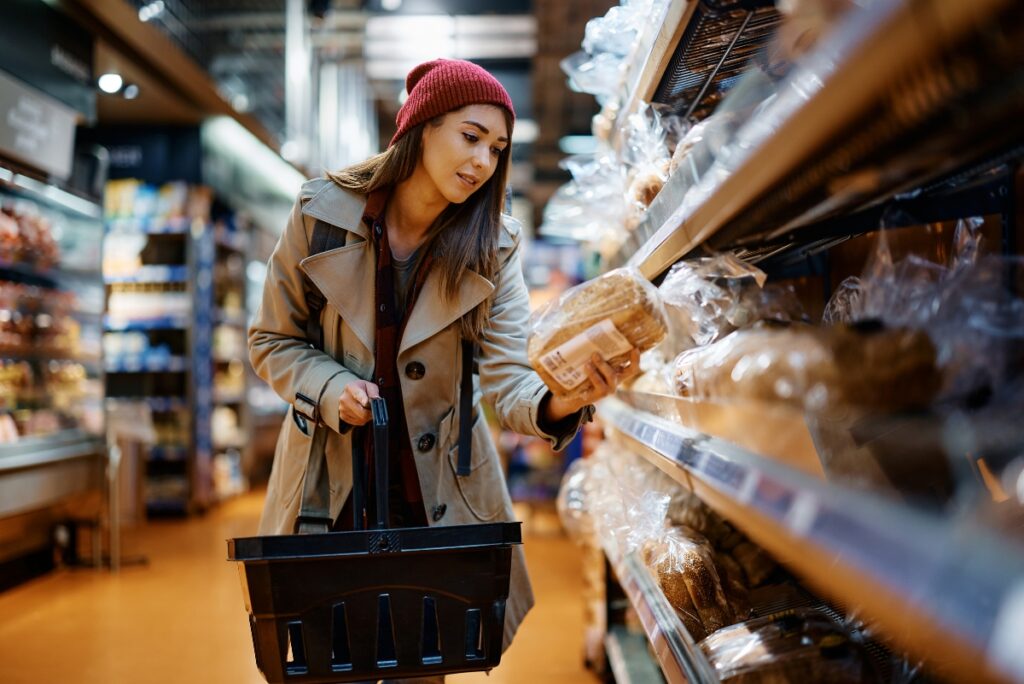
Consumer shopping for bread
PHOTO CREDIT: DRAZEN | ADOBE STOCK
BY: Joanie Spencer

Joanie Spencer

NEW YORK — When so many shopper discussions revolve around rising costs, context becomes critical. Of course, price matters, but modern consumers are looking at value as a big-picture equation, according to “The Modern Value Equation: How shoppers balance price, trust, time and trade-offs,” a new study from flavor company McCormick & Co., and conducted by Knit, an AI-native research firm.

The study included 537 primary or shared grocery decision-makers across generations, household income levels and shopping behaviors. The research combined quantitative survey data with 102 AI-moderated video responses to capture measurable patterns behind modern shopping behavior and the language participants used to explain their choices.

“Price remains important, but it is only one variable in a much larger decision framework,” said Liam Hickey, head of research at Knit. “The modern shopper’s value equation is all about situational optimization.”

While many consumers might share similar budget constraints, their individual situations — whether it’s lifestyle, schedule, dietary concerns or brand loyalty — all construct their own perceived idea of value.

“A good value trip is not just one where money is saved,” the study stated. “It is one where shoppers get what they came for, trust what they bought, avoid waste, protect the products that matter and leave feeling like they made the right call.”

Advertisement

Disrupting the value proposition

Racing to the lowest price is no longer the goal; it’s more complex than that. Although 74% of study participants said everyday low prices make a trip to the grocery store feel valuable, 64% of respondents said they need something other than low price as the single most important value driver.

“Even if a retailer offers the lowest prices, failing to meet shoppers’ broader expectations can still cost them the trip and future loyalty,” said Dorothy White, shopper insights at McCormick. “Consumers have categories where they simply do not want to compromise, and forcing that compromise can damage long-term affinity and trust.”

For example, the study identified areas where shoppers might have vastly different solutions to similar challenges, depending on how they prioritize what’s important to them. That’s disrupting traditional perceptions of value, making the balance of time vs. money now highly subjective. The study revealed that while 72% of shoppers said they would visit a second store to save $25 to $30 on groceries, 43% said they would willingly pay a delivery fee to avoid a 45-minute round trip.

Grocery decision-making is no longer one-dimensional. Today, it’s hierarchical, for which the study pointed to four layers: price, trust, control and payoff.

When balanced properly, these layers can positively impact shoppers’ view of CPG products, specifically commercially produced baked goods.

Advertisement

Private label’s failure cost factor

As interest in private label grows, it has also created a paradox. Not all private label products get equal confidence. Based on the four-layer value equation, shoppers look at private label based on whether a lower-priced item feels safe or like a gamble. For instance, consumers will be less likely to trade down for meat products or snacks that come with brand loyalty, but if there’s an expectation or reputation that comes with a private label product like a baked good, there’s a lower-risk opportunity.

Knit called that the “failure cost” factor. When the failure cost is low, private label has opportunity; when it’s higher, brands will likely win. Among study participants, 26% indicated a willingness to trade down for bread and bakery products, vs. 11% who refused to.

While the center store is considered the shopping trip anchor, producers of CPG baked goods can tap into new opportunities, positioning themselves as dependable, versatile and a vital component for meal stretching. Meanwhile, they can also find opportunities in new channels such as meal and grocery subscriptions to appeal to consumers who prioritize time and convenience.

The study emphasized that value messaging must be about more than price and promotion, and that factors like taste, trust and meal success can lead to positive outcomes. For private label manufacturers, the focus should be on creating a “smart swap” where quality and convenience are not seen as a sacrifice. Ultimately, the center store — where many bakery brands and private labels compete — has become more strategic than a playing field for price comparisons. Consumers are looking for products that create total value beyond the price tag.

To take a deeper dive into the study results, Knit and McCormick are co-hosting a webinar on Aug. 13 at 1 pm Central Time.

Advertisement

Related News

Advertisement

Advertisement

Advertisement

Advertisement

Popular Articles