


Advertisement

From bench to scale: 5 essentials for commercial bakers

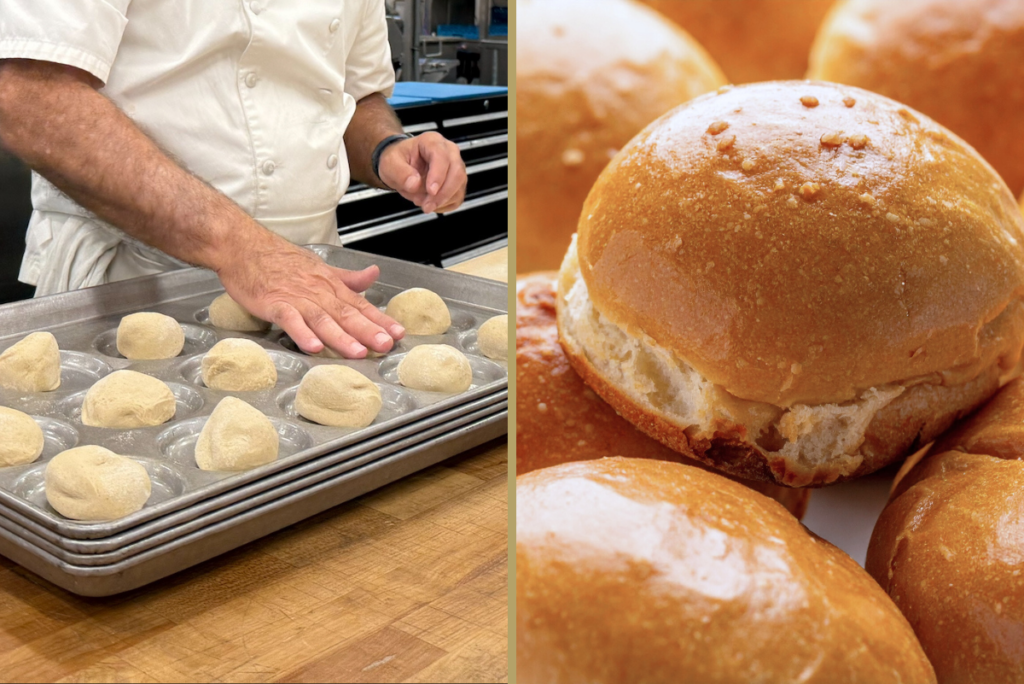
test kitchen hamburger buns and at scale burger buns
GRAPHIC COLLAGE BY AVANT FOOD MEDIA
BY: Mari Rydings

Mari Rydings

KANSAS CITY, MO — Every commercial baker’s dream is to have a product go from bench to scale with zero challenges. While that dream will likely never come to full fruition, bakers can get pretty close by following a few guidelines.

In From Bench to Scale Up, a technical session held during the American Society of Baking’s BakingTECH 2026 annual conference, Shawn Dewey, corporate assistant product manager at Franz Family Bakeries, and Duarte Raposo, senior technical service representative for Corbion, shared five essentials that can help make the transition from lab to production smoother, offering both a baker and supplier perspectives.

  • Anticipate ingredient behavior changes
  • Adjust for process and equipment differences
  • Strengthen R&D-operations collaboration
  • Validate and document consistency
  • Plan for post-launch optimization


When scaling up a product, everything from hydration rates, mixing and proofing methods, the order in which ingredients are added, and even the ingredient format can alter the finished product. Other factors such as the location of the test kitchen vs. the production facility, ambient air temperature and water quality can also affect how ingredients behave.

“There are challenges you must overcome so you can match the product that started in R&D at scale,” Dewey said. “One of the big things on the production side is intent. Sometimes we really want to know what that product needs to be. There must be communication between R&D and production so they can work through the process.”

That means inviting every department that might have a role in getting a new product to scale — operations, sanitation, quality assurance and maintenance — to the table for what Raposa called a “pretrial meeting.”

“You might need to change out a piece of machinery or add a piece,” he said. “Maybe you decide you want to spray an ingredient on top. Bringing the entire team together helps work through those different variables that can occur when scaling up.”

Advertisement

Plant trials, documentation and post-launch

Ideally, when it’s time to head to the production floor, all lab data should be readily accessible for easy reference.

“The first dough run is to get the equipment in line, parameters set, people trained and to see what the customer likes,” Raposa said. “If they like the first profile, the next dough run is a plant trial — not a production run. There should be a minimum of three dough runs to get all the tweaks made and to get the product to where it’s perfect for the customer.”

Advertisement

To reach that point faster, Dewey said, bakers need to understand all the complexities of the facility that might impact the final product, from the temperature in the bakery to the humidity level in the proof box. They also need to document every step and data point throughout each run to ensure repeatability and sustainability.

Documentation is also a best practice, not to mention a requirement, for food safety audits and recalls.

“Bakeries are regulated by the FDA, and we need to keep that in the back of our mind,” Raposa said. “When we say that we get a certain kill temperature, we’d better make sure we get that kill temperature. If someone gets sick from eating our product, we have to prove our process.”

Advertisement

Finally, post-launch monitoring is essential because it provides feedback that allows bakers to make adjustments quickly.

“Launch doesn’t mean it’s the end,” Dewey said. “It’s the beginning. Monitoring should open a line of communication between your operators, sales team and customers. I recommend following up with your teams during the first four to eight weeks post-launch to see how things are going. There are all kinds of variables that may change the product. You must always be looking back and checking to make sure it’s the product you — and the customer — want.”

Related News

Advertisement

Advertisement

Advertisement

Advertisement

Popular Articles