


Advertisement

Navigating the swap to natural sweeteners

Navigating the swap to natural sweeteners
BY: Maggie Glisan

Maggie Glisan

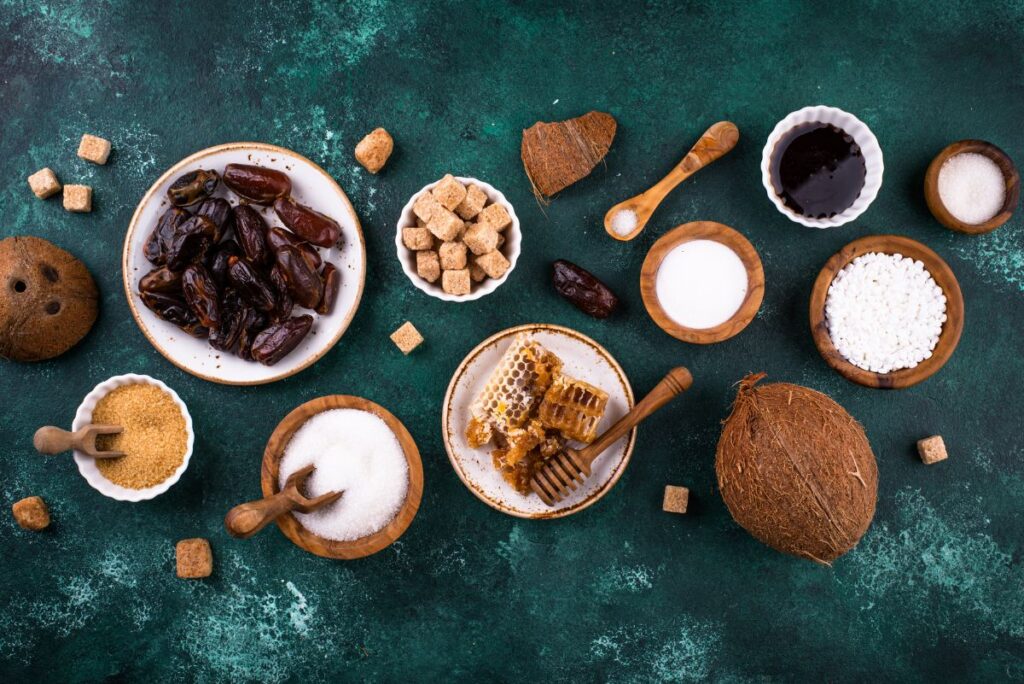
KANSAS CITY, MO — Working with natural sweeteners often means accepting that they aren’t simple drop-in replacements for refined sugar, especially in formulations where sugar functions beyond sweetness. In cookies, granulated sugar influences creaming efficiency, spread and texture, all variables that become harder to control with less refined alternatives.

“The granule size of the sugar really matters,” said Lex Evan, founder and CEO of Lexington Bakes, a better-for-you luxury treat brand. “When you try to do that with something like date sugar, which is more of a powder, it just doesn’t work. It wasn’t giving me the texture I needed.”

Other products, such as brownies, are more forgiving. In that instance, sugar melts into butter and chocolate, building sweetness and flavor simultaneously. That melting behavior allows for more flexibility with alternative sweeteners, compared to cookies, where structure is less negotiable.

Oat bars present another challenge. Evan initially formulated his with maple syrup alone, but it wasn’t sticky enough to hold the oats together. Adding date sugar solved the problem while providing additional benefits.

“It reduced added sugar, helped bind everything together and added fiber,” he said. “But it’s not a one-to-one swap. You really have to test and learn how it interacts with other ingredients.”

But structure is only one part of the balancing act. There are taste variations to consider as well. Date sugar, for example, carries a pronounced taste that can dominate if overused. Its reaction to heat must be considered, as well. Unlike cane sugar, date sugar doesn’t melt smoothly, thickening instead into a paste that can resist blending.


Advertisement

Success isn’t just about finding a perfect one-to-one replacement for refined sugar. It’s also about understanding what each sweetener contributes … and how it fits into a product’s broader goals.

Advertisement

Another brand navigating the realities of natural sweeteners at scale is Maxine’s Heavenly, a cookie company that has prioritized unrefined sugars since its earliest formulations. According to co-founder and CEO Robert Petrarca, coconut sugar and dates weren’t added in response to trends; they were foundational from day one.

“We were really interested in alternatives to highly refined sugar from the very beginning,” Petrarca said. “Coconut sugar was one of the first commercially available options at the time, and we went all in on it early, even when almost no one else was using it.”

Dates also became critical when Maxine’s Heavenly made the leap to shelf-stable products. Coconut sugar alone, Petrarca said, couldn’t deliver the moisture retention needed to survive long distribution timelines.

“When we needed shelf life, dates changed everything,” he said. “They were kind of a miracle ingredient for us.”

But, like Evan, Petrarca emphasized that natural sweeteners introduce layers of complexity that refined sugar largely eliminates.

“[With white sugar] you strip everything out, grind it to the same mesh every time, and you get total consistency,” he said. “With coconut sugar and dates, you’re dealing with natural variation. Mesh size alone can change how much a cookie spreads.”

Shelf life, particularly for soft-baked cookies, remains one of the biggest hurdles for product development that relies on natural sweeteners.

“Crispy cookies are much easier,” Petrarca said. “Soft-baked cookies are incredibly volatile. There’s a reason you don’t see many of them in natural grocery aisles. They’re hard to keep stable through long distribution chains.”

Petrarca sees growing consumer awareness around types of sugar — not just sugar reduction — as a meaningful shift.

“People care more than ever about where sweetness comes from,” he said. “Not all sugars are created equal. If you stay grounded in that belief, and you’re willing to do the hard work upfront, that’s where you win long term.”

As natural sweeteners move from niche to mainstream, so does the conversation around them. For bakers, success isn’t just about finding a perfect one-to-one replacement for refined sugar. It’s also about understanding what each sweetener contributes, where it falls short, and how it fits into a product’s broader goals around taste, texture, shelf life and transparency. The brands finding traction are those willing to do the work: testing, adjusting and accepting variability in exchange for ingredients consumers recognize and trust.

This story has been adapted from the February | Q1 2026 issue of Commercial Baking. Read the full story in the digital edition here.

Advertisement

Related News

Advertisement

Advertisement

Advertisement

Advertisement

Popular Articles