Advertisement

How cake makers balance technology with craft

Cakes that blend technology with craft
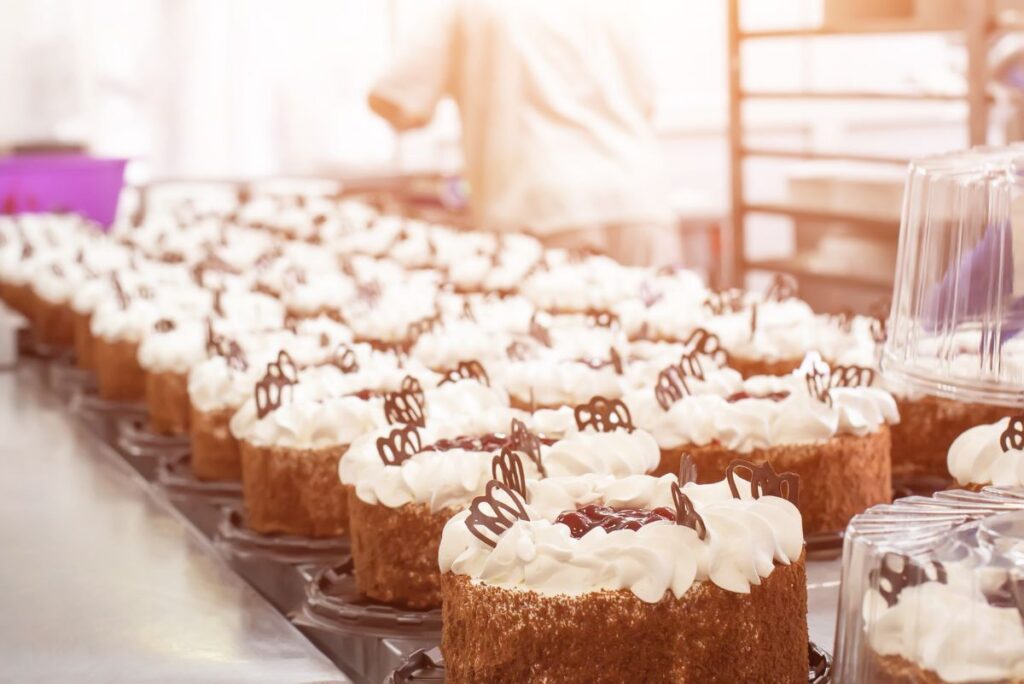
PHOTO CREDIT: HENADZY | ADOBE STOCK

KANSAS CITY, MO — Cakes remain a celebratory centerpiece for special occasions, but product taste, quality and consistency are essential. Manufacturers understand the importance of aligning R&D strategy with the right blend of operations capabilities, advanced technology, skilled labor and premium ingredients to produce cakes that resonate.

Here’s how a few wholesale cake producers integrate each aspect to create desserts that generate sales.

Minneapolis-based Rise Baking Co.’s R&D and production teams work together to develop cake and icing solutions that meet the evolving needs of its customers. This collaboration ensures the company’s finished cakes provide flavors and formats that help their customers meet consumer demand.

Advertisement

“Versatility is key, and we have developed a broad portfolio backed by world-class brands, so our customers can build the kind of program that becomes a cake destination,” said Michael Docherty, EVP, marketing, R&D and innovation at Rise Baking. “From classic dessert cakes and base-iced layer cakes to pre-cut iced cake squares and mini Bundt cakes, each Rise product is designed to deliver a soft texture, balanced sweetness and dependable performance in both room temperature and refrigerated environments.”

Engaging with customers onsite helps ensure consistency with baking, finishing, packaging and display. Rise tailors its packaging to each product; fully decorated cakes are packaged in domes for easy merchandising, while cake layers are packed for convenient day-of use. The company’s pre-cut, pre-iced cake squares provide a ready-to-customize base to help customers save on labor while maximizing creativity.

Finding the balance

Balancing automated equipment and manual operations is an evolving consideration for cake producers. Formulation, style, format, finishing, and fresh or frozen distribution determine equipment and labor use. While each type of cake presents its own set of challenges, Rise’s supply chain and operations teams focus on smart solutions to ensure consistency and quality across formats.

“We focus on finding the right balance between automation and handmade craftsmanship,” Docherty said. “Our teams have identified best practices that make sure every product meets our high standards.”

“Versatility is key, and we have developed a broad portfolio backed by world-class brands, so our customers can build the kind of program that becomes a cake destination.” — Michael Docherty | EVP, marketing, R&D and innovation | Rise Baking

Advertisement

Phoenix-based Strictly From Scratch also maintains exacting standards of product quality by strategically blending expert hand craftsmanship with automation. Overall, the operation is roughly 50% automated. The company’s sheet cakes and batter-based products are better suited for automation, which yields faster results and requires minimal equipment changeovers.

“This hybrid approach allows us to maintain artisan quality while efficiently responding to the heavy demands of our commercial-scale production,” said Rudy DePaola, president and CEO at Strictly From Scratch. “Each product line dictates whether production is automated or completed by hand.”

Creating the toolbox

DePaola believes the biggest innovation shaping the cake category in recent years has been the emergence of hybrid automation supported by smarter ingredient systems.

“Bakeries now have the tools to achieve large-scale consistency while still delivering premium products with a handmade feel,” DePaola said. “Automated depositing, scaling and finishing technologies have evolved to deliver the speed, accuracy and consistency necessary to fill large orders without sacrificing the texture and handcrafted bakery experience consumers expect.”

Acquiring a cake cutter was a game-changer for Strictly From Scratch. DePaola said the equipment allowed the company to enter the sheet cake category with commercial-level consistency that operations could not previously support at scale.

“This equipment, along with our batter depositors and a unique baking vessel, allowed us to standardize portioning, enhance visual uniformity and reduce labor variability,” DePaola explained.

Advertisement

Dripping Springs, TX-based Tootie Pie Co. expanded into the cake category by creating styles and flavors in multiple formats and sizes, including its individually packaged Tootie’s Cutie cakes. To support its foray into the wholesale business, the bakery built an 11,000-square-foot facility to produce cakes and other desserts.

“We worked with designers to build a linear, lean flow process from start to finish,” said Scott Calvert, president of Tootie Pie. “Raw ingredients arrive on one side of the facility, and completed products are packaged on-site at the other side.”

To finish its round cakes, the company uses a Unifiller Cake-O-Matic icer that features a tool that combs the side of the iced cake. Final finishing with rosettes, flowers or piping is completed by hand.

“Many of our customers display our cakes in bakery cases or on dessert carts and want them to look handmade,” Calvert said.

Once its production facility was built, adding equipment to increase efficiency and enhance operations was a pathway to growth for Tootie Pie. With that, Calvert acknowledged the challenges with retaining labor and the need for equipment that improves production efficiency.

“We have a good mix of equipment and people to carry out operations at our production facility,” Calvert said. “We evaluate our equipment needs by considering how it will help our team minimize unnecessary physical labor, create efficiency, streamline production and quickly realize ROI.”

This story has been adapted from the February | Q1 2026 issue of Commercial Baking. Read the full story in the digital edition here.

Related News

Advertisement

Advertisement

Advertisement

Advertisement

Popular Articles